
My Garage
My Account
Cart
Genuine 2002 Chevrolet Trailblazer Axle Shaft
Car Axle Shaft- Select Vehicle by Model
- Select Vehicle by VIN
Select Vehicle by Model
orMake
Model
Year
Select Vehicle by VIN
For the most accurate results, select vehicle by your VIN (Vehicle Identification Number).
6 Axle Shafts found
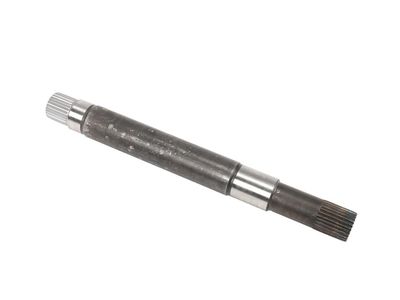
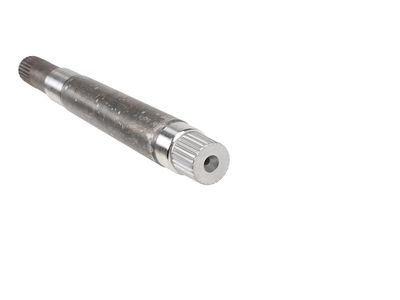
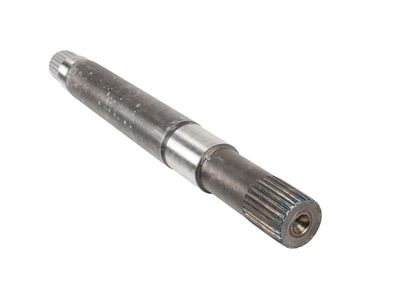

2002 Chevrolet Trailblazer Axle Shafts
Part Number: 12479125$376.25 MSRP: $593.06You Save: $216.81 (37%)Ships in 1-3 Business DaysProduct Specifications- Other Name: Shaft, Front Axle; Axle Shaft, Intermed Shaft
- Position: Front Inner
- Item Weight: 4.70 Pounds
- Item Dimensions: 13.5 x 4.5 x 4.4 inches
- Condition: New
- Fitment Type: Direct Replacement
- SKU: 12479125
- Warranty: This genuine part is guaranteed by GM's factory warranty.


2002 Chevrolet Trailblazer Axle Shaft
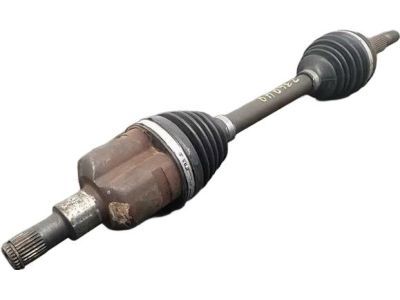
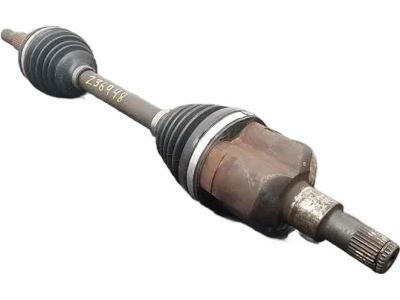
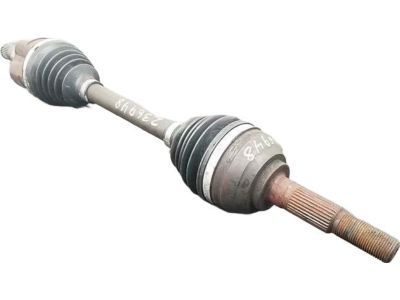
Part Number: 19133413$359.88 MSRP: $571.95You Save: $212.07 (38%)Product Specifications- Other Name: Shaft, Rear Axle Drive; Axle, Axle Shaft
- Position: Rear Passenger Side
- Replaces: 12479161
- Item Weight: 19.30 Pounds
- Item Dimensions: 34.0 x 6.6 x 6.6 inches
- Condition: New
- Fitment Type: Direct Replacement
- SKU: 19133413
- Warranty: This genuine part is guaranteed by GM's factory warranty.
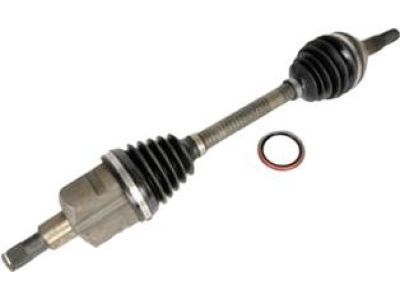

2002 Chevrolet Trailblazer Front Wheel Drive Shaft Kit
Part Number: 26079789$390.26 MSRP: $615.16You Save: $224.90 (37%)Product Specifications- Other Name: Shaft Kit,Front Wheel Drive; Axle Assembly
- Position: Front
- Item Weight: 19.80 Pounds
- Item Dimensions: 5.2 x 5.2 x 36.0 inches
- Condition: New
- Fitment Type: Direct Replacement
- SKU: 26079789
- Warranty: This genuine part is guaranteed by GM's factory warranty.
- Product Specifications
- Other Name: Shaft,Rear Axle (Lh); Axle, Axle Shaft
- Position: Rear Driver Side
- Replaces: 12479160
- Item Weight: 19.70 Pounds
- Item Dimensions: 33.9 x 7.1 x 7.1 inches
- Condition: New
- Fitment Type: Direct Replacement
- SKU: 19133412
- Warranty: This genuine part is guaranteed by GM's factory warranty.
 Product Specifications
- Other Name: Shaft,Rear Axle ; Shaft, Rear Axle Drive; Axle Shaft
- Position: Rear
- Replaces: 12479016
- Item Weight: 19.40 Pounds
- Item Dimensions: 34.3 x 6.8 x 7.0 inches
- Condition: New
- Fitment Type: Direct Replacement
- SKU: 19133409
- Warranty: This genuine part is guaranteed by GM's factory warranty.
 Product Specifications
- Other Name: Shaft,Rear Axle ; Shaft, Rear Axle Drive; Axle Shaft
- Position: Rear
- Replaces: 12479017
- Item Weight: 19.80 Pounds
- Item Dimensions: 34.0 x 6.9 x 6.7 inches
- Condition: New
- Fitment Type: Direct Replacement
- SKU: 19133410
- Warranty: This genuine part is guaranteed by GM's factory warranty.
2002 Chevrolet Trailblazer Axle Shaft
We are your prime source for competitively priced and high-quality OEM 2002 Chevrolet Trailblazer Axle Shaft. We provide you with parts that will allow you to save a lot of money without sacrificing quality. All our OEM parts are backed by the manufacturer's warranty and shipped out at a swift rate.
2002 Chevrolet Trailblazer Axle Shaft Parts Questions & Experts Answers
- Q:What are the features of the rear axle shaft assembly, common issues, and recommendations for maintenance and repair on 2002 Chevrolet Trailblazer?Posted by Jeremey E.A:The rear axle assembly is a hypoid, semi-floating type, in which the outer rear wheel turns at a faster rate than the inner one during cornering, and differential action is provided by axleshafts splined to the differential side gears. A locking limited-slip rear axle is available as an option, though it works to the normal until one of the wheels starts spinning, using multi-disc clutch packs to bring the speed of axleshafts into balance. The 4WD models have a fully independent type front axle assembly with the differential body integrated to the front axle housing incorporated with constant velocity joints; the right extension axleshaft is used to ac.modate the offset of the differential body. These include road noise which does not change with power, tire noise which may result from worn or insufficiently inflated tires and engine or transmission noise which can be cancelled out by observing the engine speed. Changing the differential is not easy for do-it-yourself repairs since tools used are specialty, hence, tasks such as axleshaft removal, oil seal replacement among others, bearing replacement should be handled in a repair shop.Answered by GM Parts Specialist Raul / Sep 06, 2022
Related 2002 Chevrolet Trailblazer Parts
 2002 Chevrolet Trailblazer Wheel Bearing
 2002 Chevrolet Trailblazer Transmission Assembly
 2002 Chevrolet Trailblazer Torque Converter
 2002 Chevrolet Trailblazer Slip Yoke
 2002 Chevrolet Trailblazer Transmission Pan
 2002 Chevrolet Trailblazer Output Shaft Bearing
 2002 Chevrolet Trailblazer Transmission Gasket
 2002 Chevrolet Trailblazer Input Shaft Bearing
 2002 Chevrolet Trailblazer Pinion Washer