
My Garage
My Account
Cart
Genuine 2002 Chevrolet Trailblazer Crankshaft Seal
- Select Vehicle by Model
- Select Vehicle by VIN
Select Vehicle by Model
orMake
Model
Year
Select Vehicle by VIN
For the most accurate results, select vehicle by your VIN (Vehicle Identification Number).
2 Crankshaft Seals found
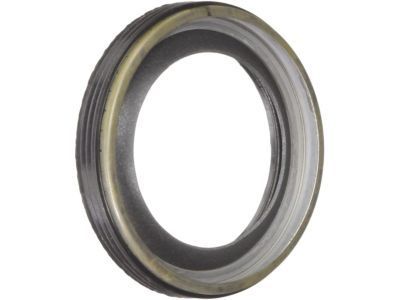
2002 Chevrolet Trailblazer Seal Kit,Crankshaft Front Oil
Part Number: 89017621$22.44 MSRP: $34.51You Save: $12.07 (35%)Product Specifications- Other Name: SEAL KIT, Engine Rear Main Bearing; Front Crank Seal, Front Seal
- Position: Front
- Item Weight: 0.40 Pounds
- Item Dimensions: 3.1 x 3.0 x 0.6 inches
- Condition: New
- Fitment Type: Direct Replacement
- SKU: 89017621
- Warranty: This genuine part is guaranteed by GM's factory warranty.
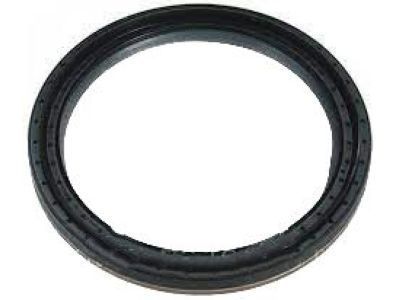
 Product Specifications
- Other Name: SEAL, Engine Rear Main Bearing; Rear Main Seal
- Position: Rear
- Replaces: 24577096
- Item Weight: 0.50 Pounds
- Item Dimensions: 5.7 x 5.8 x 1.1 inches
- Condition: New
- Fitment Type: Direct Replacement
- SKU: 12581717
- Warranty: This genuine part is guaranteed by GM's factory warranty.
2002 Chevrolet Trailblazer Crankshaft Seal
We are your prime source for competitively priced and high-quality OEM 2002 Chevrolet Trailblazer Crankshaft Seal. We provide you with parts that will allow you to save a lot of money without sacrificing quality. All our OEM parts are backed by the manufacturer's warranty and shipped out at a swift rate.
2002 Chevrolet Trailblazer Crankshaft Seal Parts Questions & Experts Answers
- Q:How to Remove and Install the front Crankshaft Seal in six cylinder engine on 2002 Chevrolet Trailblazer?Posted by Earlene E.A:One must not destroy the crankshaft threads; if the other setup does not easily come off the pulley, one should stop, get the proper tools or have a mechanic do it. Following this, attention should be paid to the fact that it is possible to harm the crankshaft end surface or the engine front cover. Additional tools are puller for crankshaft (GM # J-44226 or equivalent), crankshaft end protector (GM# J-41816-2 or equivalent), pulley installer (J-41478 or equivalent) and the seal installer (GM # J-44218 or equivalent). In the other arrangement that can be used, there is the three-jaw puller, the deep socket that is fitted on the nose of the crankshaft, and the press tool that screws into the cranshaft end. Crank pulley may be positioned in any manner due to non-availability of keyway to fix its position and whenever crank pulley is replaced a new shim must be inserted. To remove the bolt you have to pull out the radiator, drivebelt, torque converter access plate and jam the driveplate so the crankshaft cannot turn. Once the crankshaft pulley bolt has been undone to accommodate the puller and the crankshaft end protector fitted in place, then the puller will be used to remove the pulley and shim. It is recommended to use much care when applying the three-jaw puller so as to ensure you only get a hold of the hub of the pulley not the outer periphery, an industrial deep socket provides good support for the screw of the puller. The oil seal should be removed out from the oil port with the help of suitable tool. For installation, the pulley is checked to ensure that it was damaged, then external face of the oil seal needed to be lubricated while the inside should be left dry before embarking on driving the seal completely into the front cover. An OEM should be fitted to the crankshaft sprocket, and the pulley positioned over the crankshaft and inserted with the help of an installer tool. The installer tool should be removed, and pulley washer and bolt should be installed, when tightening the bolt, one person should hold a screwdriver at the ring gear teeth. The other installation procedures are always done in a backward manner to the removal procedures.Answered by GM Parts Specialist Julian / Jun 30, 2023
Related 2002 Chevrolet Trailblazer Parts
 2002 Chevrolet Trailblazer Crankshaft Thrust Washer Set
 2002 Chevrolet Trailblazer Coolant Temperature Sensor
 2002 Chevrolet Trailblazer Crankshaft
 2002 Chevrolet Trailblazer Crankshaft Position Sensor
 2002 Chevrolet Trailblazer Camshaft Position Sensor
 2002 Chevrolet Trailblazer Crankshaft Gear
 2002 Chevrolet Trailblazer Belt Tensioner Bolt
 2002 Chevrolet Trailblazer Crankcase Breather Hose