My Garage
My Account
Cart
Genuine Chevrolet Beretta Throttle Cable
Accelerator Throttle Cable- Select Vehicle by Model
- Select Vehicle by VIN
Select Vehicle by Model
orMake
Model
Year
Select Vehicle by VIN
For the most accurate results, select vehicle by your VIN (Vehicle Identification Number).
22 Throttle Cables found
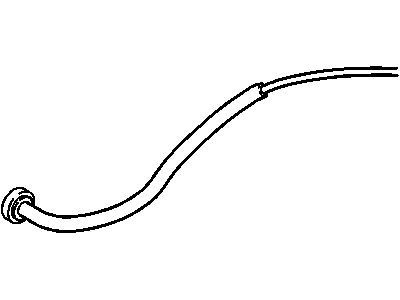
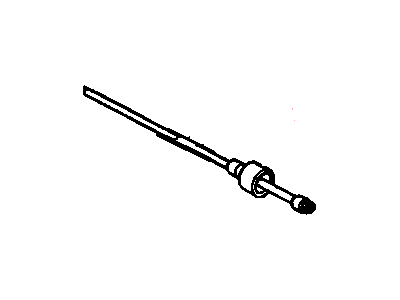
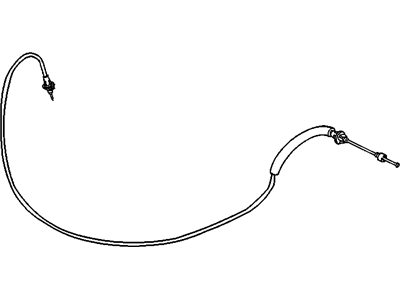
Chevrolet Beretta Accelerator Control Cable Assembly
Part Number: 10054223$12.60 MSRP: $19.39You Save: $6.79 (36%)Ships in 1-3 Business Days

| Page 1 of 2 |Next >
1-20 of 22 Results
Chevrolet Beretta Throttle Cable
The Chevrolet Beretta Throttle Cable connects the gas pedal directly to the throttle plate so that the driver has more immediate control over engine airflow and power. The braided steel Throttle Cable stretches from the firewall to the throttle body. The inner wire moves freely within a sheath. That way, the pedal movement immediately rotates the butterfly valve without delay or sticking. On earlier Chevrolet models with throttle body injection, the cable opens one or two plates within the centrally mounted unit. The plates' opening information gets sent to the PCM whose job is to match the fuel pulse width. Subsequently, electronic drive by wire replaced the mechanical link on many trims. However, when a traditional Throttle Cable is present, it remains valued for its simple, direct feel and ease of diagnosis. The Beretta has one fundamental style: a single strand mechanical cable although systems later shifted to an electric motor with accelerator pedal position sensors which erase the need for any cable. The key difference is thus purely mechanical vs electronic. The legacy Throttle Cable setup doesn't cause PCM or motor faults but needs to be checked for fraying or binding once in a while as compared to the wire free setup. The system ensures smooth modulation of air intake to enable the PCM to balance fuel, emissions, and idle speed on both multi port injected or older TBI assembly engines in Chevrolet Beretta. The Throttle Cable is essential for maintaining optimal performance.
Each OEM Chevrolet Beretta Throttle Cable we offer is competitively priced and comes with the assurance of the manufacturer's warranty for the part. Furthermore, we guarantee the speedy delivery of your orders right to your doorstep. Our hassle-free return policy is also in place for your peace of mind.
Chevrolet Beretta Throttle Cable Parts Questions & Experts Answers
- Q:How to remove and install the throttle cable and cruise control cables on Chevrolet Beretta?A:Disconnect the cable from the negative terminal of the battery, ensuring that on models equipped with the Delco Loc II audio system, the lockout feature is turned off before any procedure requiring battery disconnection. The throttle cable is secured to the throttle linkage by either a retaining clip or a plastic cable retainer. To remove the retaining clip, use a small screwdriver to pop it off the post on the throttle lever arm and detach the cable end. For the plastic cable retainer, push the cable end forward and lift up to detach it from the post on the throttle lever arm. To detach the throttle cable and, if applicable, cruise control cables from the cable support bracket, use needle-nose pliers to squeeze the locking tabs on the top and bottom of the cable retainer, then pull the cable assembly through the bracket. Carefully observe the routing of the cable before proceeding; while inside the vehicle, pull the cable toward you and detach it from the accelerator pedal. Follow the cable until locating the locking cable retainer on the passenger compartment side of the firewall, then use needle-nose pliers to squeeze the locking tabs and push the retainer through the firewall. Finally, remove the accelerator cable assembly, with installation being the reverse of removal.