
My Garage
My Account
Cart
Genuine Pontiac Phoenix Flywheel
Clutch Flywheel- Select Vehicle by Model
- Select Vehicle by VIN
Select Vehicle by Model
orMake
Model
Year
Select Vehicle by VIN
For the most accurate results, select vehicle by your VIN (Vehicle Identification Number).
2 Flywheels found
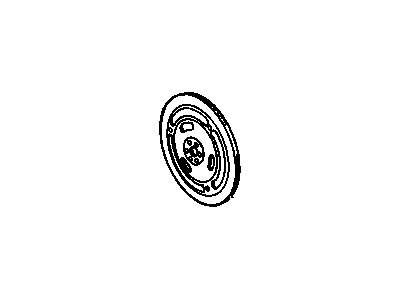
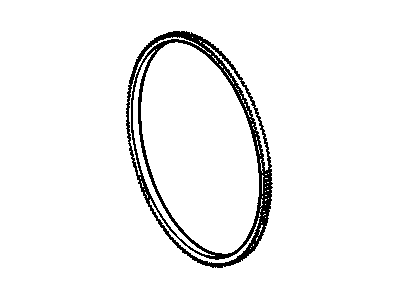
Pontiac Phoenix Flywheel
The Flywheel in a Pontiac Phoenix absorbs each pulse in an engine's power stroke while acting as a reliable partner in motion for the starter and clutch. The Flywheel, a heavy steel disc, is an energy-storing device that stores energy in its rotation about the crankshaft. The mass of the Flywheel evens out the combustion surges and maintains crankshaft spins between sparks. When you twist the key, the starter drive meshes with the ring gear on the Flywheel to crank the motor to life. Over decades of Pontiac production, the Phoenix was offered with two main versions of this component, aiming for smoothness and durability. Each time gears are changed, the clutch disc will grip the Flywheel face, transferring torque to the transmission while rubbing against the metal face over time. The first option is the solid Flywheel, which refers to a single piece. If it gets grooved or heat-spotted, it can usually be resurfaced and its runout remains correct. The second feature is the dual mass design, which separates the disc into primary and secondary sections having spring damping in between. This absorbs unwanted vibration and sharpens shift feel. It cannot be machined, however. Moreover, when its springs loosen and its ring gear teeth crack, it must be replaced. Every Pontiac Phoenix is quick to start and easy to drive.
Each OEM Pontiac Phoenix Flywheel we offer is competitively priced and comes with the assurance of the manufacturer's warranty for the part. Furthermore, we guarantee the speedy delivery of your orders right to your doorstep. Our hassle-free return policy is also in place for your peace of mind.
Pontiac Phoenix Flywheel Parts Questions & Experts Answers
- Q:How to gain access to the flywheel and what are the steps involved in its removal and installation on Pontiac Phoenix?A:To gain access to the flywheel, either the engine or the transaxle must be removed from the car, with the engine being removed if additional work is needed; otherwise, removing the transaxle is easier. If equipped with a manual transaxle, the clutch should be removed from the flywheel. The flywheel can be unbolted from the rear flange of the Crankshaft, and to prevent it from turning, a long screwdriver or similar tool can be used against the engine block while removing the mounting bolts. Once the bolts are removed, the flywheel can be lifted off, and the flywheel spacer should be removed if equipped. For L4 engines, if the rear main bearing seal needs replacement, it should be pried out of its bore. The flywheel teeth should be examined for any broken or chipped teeth, as this condition requires replacement with a new flywheel. On manual transaxle flywheels, the clutch friction face should be inspected for scoring; light scoring can be corrected with emery cloth, but deep scoring necessitates machining or replacement to avoid clutch damage. For automatic transaxle flywheels, the converter securing bolt holes should be checked for elongation, which also requires flywheel replacement. Before installing the flywheel, the mating surfaces of the flywheel and crankshaft should be cleaned. If the oil seal was removed on L4 engines, a light coat of engine oil should be applied to the inside lip of the new seal before installation. To install, the flywheel should be positioned against the crankshaft using a new spacer if equipped, and the mounting bolts should be inserted and secured only fingertight, ideally using a thread sealing agent on the bolt threads. While preventing the flywheel from turning, the bolts should be tightened gradually until all are torqued to specifications, and the remainder of the installation procedure should be completed by reversing the removal steps.
Related Pontiac Phoenix Parts
 Pontiac Phoenix Wheel Bearing
 Pontiac Phoenix Shift Cable
 Pontiac Phoenix Torque Converter
 Pontiac Phoenix Wheel Seal
 Pontiac Phoenix Cruise Control Switch