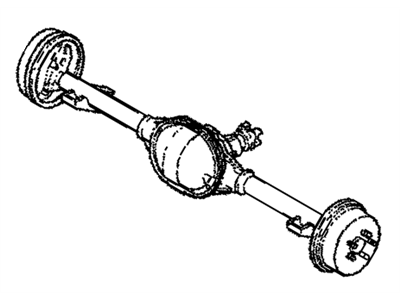
To start the process of removing the rear differential, lift the rear of the vehicle and support it securely using jackstands. Take off the wheel as well as brake drum. If there is a locking differential on that vehicle, remove both rear wheels and brake drums. Remove the cover of your differential to let the oil drain into a pan. For traditional differentials, take out pinion shaft by extracting lock bolt. Using an assistant push in on an outer flanged end of an axle shaft while removing any c-lock from groove inside opposite end of a shaft. Turn over such a differential so that you can gain access and support its pinion shaft in order to avoid it falling down into case when working on locking type differentials. Partially withdraw your pinion shaft by taking out its lock bolt and rotating this type of differential until a shaft touches case allowing enough space for clearing out to c-locks. Use screwdriver for twisting c-lock until open endpoints are aligned then insert axleshaft back in then remove c-lock which is compressed at this time, repeat procedure with another axleshaft also with C-Lock no longer in place carefully pullout axleshaft because it may damage oil seal if not taken with great care some models may have a thrust washer in diff make sure it doesn't fall out when removing axle shaft next, take care inserting this part into housing so that it seats properly inside differential always used on typical differentials putting lock on flange must be used to achieve this result put C-Lock back into groove on axle shaft slide backwards using correct positioning after installing C-locks after withdrawing axleshafts slowly until C-Lock clears thrust block now that c-locks are installed push pinion shat through position where hole lines up with lock bold hole then install lock bolt at last install cover and fill diff with specified lubricants reinstalling brake drums and wheels followed by lowering car.