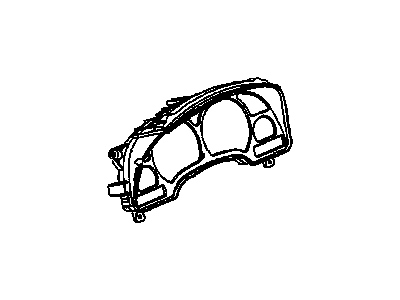
This procedure is difficult for home mechanics because there are hidden fasteners, difficult to reach areas as well as numerous electrical connectors that require to be marked and then disconnected. Affordability should however only be attempted by those who are very experienced in undertaking do it yourself projects. If there is a need to pull out the instrument panel, make sure one notes the position of every object being removed and how it fits into the overall structure and the methods of fixing. this particular modification is not mandatory, but if both front seats are unbolted entirely, one gets extra working space plus lesser chances of the destructive impacts. To start with, remove the cable from the negative terminal of the battery, next remove the upper cover of the instrument panel, glove box, instrument cluster, and radio. Then, extract the center storage console and the shifter console side covers and lastly the air outlets at the extremities of the instrument panel. Remove all the instrumental cluster connection wires and remove the ground connection of the radio. At the right end of the control panel very large wiring harnesses from the body control module, remove the diagnostic link connector, using the latches. Remove the kick panels and the door thresholds, and the electrical connector for the passenger airbag module, and the two nuts of the latter. Several electrical connectors as well as the ground wires need to be disconnected for the removal of the instrument panel; one may use some tapes to mark these during restoration. Some of the screws involve are from concealing a stud at lower right of the car and all those connecting the instrument panel to the body should be undone. After all the fasteners have been removed, one has to take the panel out through the driver's door opening with help. It is just the opposite of the removal method in which an insulator is placed at each of the connection points and the mounting screws tightened starting from the middle.