
My Garage
My Account
Cart
This part fits
1993 Chevrolet Metro
Check another vehicle- Fitting Vehicle Options: MS, MR(08-68-67)
GM 96055086 Engine Crankshaft
1985-2000 GM
Customer Questions & Expert Answers (2)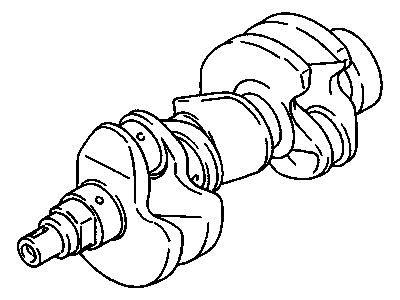
- Part DescriptionCrankshaft, Engine
- Replaces
- ManufacturerGeneral Motors
- Manufacturer's NotesThis part is discontinued.
This part fits
1993 Chevrolet Metro
Check another vehicle- Fitting Vehicle Options: MS, MR(08-68-67)
- Related Parts
- Specifications
- Q&A
Product Specifications
Brand Genuine GM Manufacturer Part Number 96055086 Part Description Crankshaft, Engine Other Names Crankshaft Item Dimensions 19.0 x 8.4 x 6.4 inches Item Weight 13.20 Pounds Condition New Fitment Type Direct Replacement Replaces 96051626 Manufacturer General Motors SKU 96055086 Warranty This genuine GM part is guaranteed by GM's factory warranty. Shipping & Return Shipping Policy Return Policy Warning: California's Proposition 65Customer Questions & Expert Answers
- Q:I'm wondering if this is complete and correct part for my vehicle. Posted by GMPartsGiant Specialist
- A:You can Select Your Vehicle to check if 96055086 fits your vehicle.Posted by GMPartsGiant Specialist
- Installation and Repair Tips by AI Expert
- Removal steps 1. Park on a level surface, chock wheels, wear eye/hand protection and relieve any stored energy (springs/pressurized systems) before starting. 2. Disconnect the negative battery cable and isolate electrical systems. 3. Drain engine oil and coolant as needed to prevent spills and to allow component removal. 4. Remove or move aside accessories and components that block access (belts, pulleys, accessory mounts, intake/exhaust components, A/C or power-steering units as required); support any items that are unbolted. 5. Support the engine or transmission securely with an engine hoist or appropriate support if separation or lowering is required to access the crankshaft. 6. Remove timing components and timing cover or access plates as applicable for the engine design (timing belt/chain, sprockets, guides - procedures vary by design). 7. Remove the crankshaft pulley/harmonic balancer or drive pulley as commonly required to free the crankshaft end. 8. Remove the oil pan and any oil-supply or pick-up components necessary to expose the main caps and thrust surfaces. 9. Mark and keep each main cap and bearing shell with its original orientation and location; remove main cap bolts and caps carefully, noting thrust bearing placement. 10. Lift the crankshaft straight out with help, using clean wraps and keeping journals protected from nicks; set the crankshaft on a clean, padded surface. 11. Inspect journals, bearings, thrust surfaces and surrounding components; keep all parts organized for reassembly. Installation steps 1. Clean block bearing bores, journals and mating surfaces thoroughly with lint-free rags and solvent; ensure oil passages are clear. 2. Install new or inspected bearing shells in their original orientation and location; verify correct bearing type per service information. 3. Apply assembly lubricant to bearing surfaces and crank journals as recommended for assembly. 4. Carefully lower the crankshaft into the block, keeping it aligned and avoiding contact that could nick bearings. 5. Install main caps in their original orientation and hand-start fasteners; follow the correct tightening sequence and final torque values from the service manual (do not guess torque). 6. Check crankshaft endplay with an appropriate dial indicator and adjust or replace thrust bearings if endplay is out of specification per the manual. 7. Reinstall oil pump, oil pickup, oil pan and any seals or gaskets replaced during disassembly; replace seals/gaskets as needed. 8. Refit timing components, timing cover, crank pulley/harmonic balancer and all accessories in reverse order of removal, using new seals and gaskets where required. 9. Reattach transmission or mounts if removed and remove engine support; ensure alignment and secure all mounts. 10. Refill engine oil and coolant to proper levels and reconnect the negative battery cable. 11. Prime the oiling system before initial start (commonly by cranking with fuel/ignition disabled or using an oil priming method) and verify oil pressure at startup. 12. Start the engine, listen for abnormal noises, check for leaks and recheck critical fastener torque and clearances after initial run-in as specified in the service information. 13. Repair tip: keep main caps and bearings in order and use assembly lube; measure endplay and journal condition rather than guessing-replace bearings and any single-use fasteners per the factory guidance.
- Q:
Why choose GM Parts Giant
- Dedicated Service
Your complete satisfaction is our #1 goal
- Lowest Prices
Best deals on genuine OE parts from dealerships
- Fast Delivery
Orders are processed and delivered promptly