
My Garage
My Account
Cart
Genuine 1983 Chevrolet El Camino Cylinder Head
Head- Select Vehicle by Model
- Select Vehicle by VIN
Select Vehicle by Model
orMake
Model
Year
Select Vehicle by VIN
For the most accurate results, select vehicle by your VIN (Vehicle Identification Number).
1 Cylinder Head found
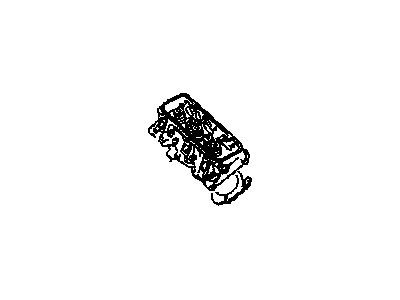 Product Specifications
- Other Name: F, Head, Rem
- Condition: New
- Fitment Type: Direct Replacement
- SKU: 12337563
- Warranty: This genuine part is guaranteed by GM's factory warranty.
1983 Chevrolet El Camino Cylinder Head
We are your prime source for competitively priced and high-quality OEM 1983 Chevrolet El Camino Cylinder Head. We provide you with parts that will allow you to save a lot of money without sacrificing quality. All our OEM parts are backed by the manufacturer's warranty and shipped out at a swift rate.
1983 Chevrolet El Camino Cylinder Head Parts Questions & Experts Answers
- Q:How should the gasket surfaces on both the cylinder heads and the engine block be prepared before installation in V8 engine on 1983 Chevrolet El Camino?Posted by Brake B.A:Thoroughly clean the gasket surfaces on both the cylinder heads and the engine block if not already done. Ensure the threads of the attaching bolts and the threaded holes in the engine block are free of dirt by running a tap through these holes. Identify the type of head gasket being used; steel head gaskets require a thin, even coat of sealer on both sides, while composition steel/asbestos gaskets should not use any sealer. Position the gasket over the engine block dowel pins with the bead side up, then carefully lower the cylinder head onto the engine, ensuring the gasket remains in place. Coat the threads of the cylinder head attaching bolts with a sealing compound and install them finger-tight without tightening at this stage. Tighten each bolt gradually in the specified sequence until the proper torque reading is achieved, then check to ensure all bolts have been tightened in the correct order. Install the exhaust manifolds and each valve lifter into its proper bore, using 'Molykote' or an equivalent coating on each lifter. Apply a small amount of 'Molykote' or its equivalent on each end of the pushrods before installing them in their original positions, ensuring they are seated properly in the lifter cavity. Place each rocker arm and corresponding rocker ball onto its original stud, applying a small amount of 'Molykote' or its equivalent to the rocker balls and valve stem ends. Adjust the valves and install the rocker arm covers, using a gasket for early models or RTV sealant for newer models. If a gasket was previously used, replace it with a new one on the cleaned cylinder head and tighten the bolts to specifications. If no gasket was used, apply a ¼-inch wide bead of RTV seal around the entire sealing surface of the cylinder head, ensuring to go around the inboard side of the bolt holes, then install the cover while the sealer is still wet and torque the bolts to specifications. Install the intake manifold with new gaskets and the remaining engine components. Finally, fill the radiator with coolant, start the engine, check for leaks, and adjust the ignition timing and valves as necessary, rechecking the coolant level once the engine has warmed up to operating temperature.Answered by GM Parts Specialist Henry / Dec 28, 2025
Related 1983 Chevrolet El Camino Parts
 1983 Chevrolet El Camino Rocker Arm
 1983 Chevrolet El Camino Rocker Shaft Spring Kit
 1983 Chevrolet El Camino Timing Cover
 1983 Chevrolet El Camino Camshaft
 1983 Chevrolet El Camino Intake Valve
 1983 Chevrolet El Camino Exhaust Valve
 1983 Chevrolet El Camino Rocker Arm Pivot