
My Garage
My Account
Cart
Genuine 1986 Chevrolet Caprice Crankshaft
Crank Shaft- Select Vehicle by Model
- Select Vehicle by VIN
Select Vehicle by Model
orMake
Model
Year
Select Vehicle by VIN
For the most accurate results, select vehicle by your VIN (Vehicle Identification Number).
2 Crankshafts found
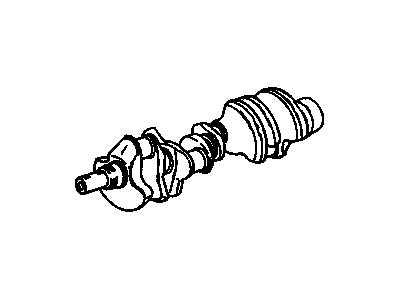 Product Specifications
- Other Name: Crankshaft (Machine) *Machine*; Crankshaft
- Item Weight: 56.30 Pounds
- Item Dimensions: 29.0 x 9.3 x 8.8 inches
- Condition: New
- Fitment Type: Direct Replacement
- SKU: 22527438
- Warranty: This genuine part is guaranteed by GM's factory warranty.
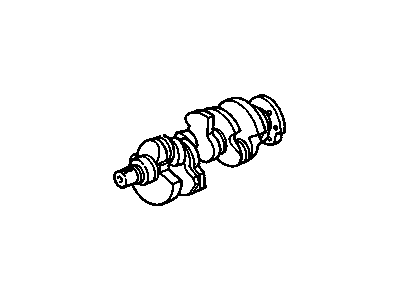 Product Specifications
- Other Name: Crankshaft Asm; Crankshaft
- Item Weight: 40.30 Pounds
- Item Dimensions: 22.3 x 7.7 x 7.6 inches
- Condition: New
- Fitment Type: Direct Replacement
- SKU: 10224877
- Warranty: This genuine part is guaranteed by GM's factory warranty.
1986 Chevrolet Caprice Crankshaft
We are your prime source for competitively priced and high-quality OEM 1986 Chevrolet Caprice Crankshaft. We provide you with parts that will allow you to save a lot of money without sacrificing quality. All our OEM parts are backed by the manufacturer's warranty and shipped out at a swift rate.
1986 Chevrolet Caprice Crankshaft Parts Questions & Experts Answers
- Q:How should a new or reground crankshaft and Crankshaft Seal be installed in V8 engine on 1986 Chevrolet Caprice?Posted by Suwanee K.A:Do not overlook the bearings for use when a new crankshaft is being installed or when the crankshaft is being reground. First of all, install the rear main bearing oil seal on the top part of the cylinder block seat and on the bottom of the rear main bearing cap, the lips should facing the front of the engine; if the oil seal has two lips the helix should also face the front. For the seal halves use a protector installation tool and lubricate the seal lips with engine oil only. Subsequently, use the main bearings into the cylinder block and the main bearing caps and apply engine oil on the bearing surfaces. Take your time to ease the crankshaft into place in order not to mar the bearing surfaces. In order not to have the sealer obstruct the crankshaft or seal, paint a thin layer of brush on sealer selectively on the block mating surface and the corresponding surface of the bearing cap. Screw in the main bearing caps to the crankshaft and over the cylinder block so that arrow points to the front of the engine. All the attaching bolts of main bearing caps should be tightened to the indicated values but the rear bearing cap should tightened in the range of 10 to 12 ft.lbs initially. From the end of the crankshaft strike by the lead hammer both at the rear and at the front to center the rear bearing, and then re-tighten all bearing cap bolts as required. To determine crankshaft end play push the crankshaft as far forward as you possibly can and use a feeler gauge to determine the clearance between the front of the rear main bearing and the crankshaft thrust surface. Last, tighten the flywheel that will help in rotating the engine when reassembling.Answered by GM Parts Specialist Raul / Nov 21, 2023
Related 1986 Chevrolet Caprice Parts
 1986 Chevrolet Caprice Crankshaft Thrust Washer Set
 1986 Chevrolet Caprice Piston Ring
 1986 Chevrolet Caprice Camshaft
 1986 Chevrolet Caprice Oil Pan
 1986 Chevrolet Caprice Oil Pan Gasket
 1986 Chevrolet Caprice Crankshaft Pulley
 1986 Chevrolet Caprice Oil Pump
 1986 Chevrolet Caprice Oil Pump Gasket
 1986 Chevrolet Caprice Crankshaft Gear
 1986 Chevrolet Caprice Rod Bearing
 1986 Chevrolet Caprice Cam Gear