
My Garage
My Account
Cart
Genuine 1986 Chevrolet Caprice Oil Pump
Oil Fluid Pump- Select Vehicle by Model
- Select Vehicle by VIN
Select Vehicle by Model
orMake
Model
Year
Select Vehicle by VIN
For the most accurate results, select vehicle by your VIN (Vehicle Identification Number).
6 Oil Pumps found
 Product Specifications
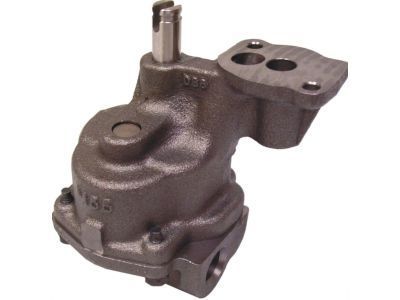
- Other Name: PUMP, Engine Oil Pump; Oil Pump, Pump Assembly
- Replaces: 12555884, 03848907, 3848907, 12555284
- Item Weight: 3.20 Pounds
- Item Dimensions: 7.2 x 4.5 x 4.4 inches
- Condition: New
- Fitment Type: Direct Replacement
- SKU: 93427692
- Warranty: This genuine part is guaranteed by GM's factory warranty.
 Product Specifications
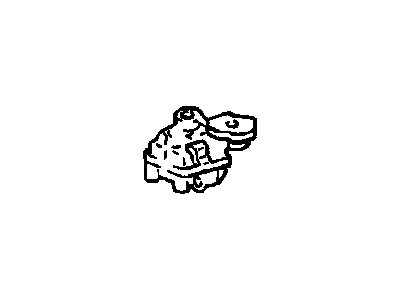
- Other Name: PUMP, Engine Oil Pump; Oil Pump
- Item Weight: 4.60 Pounds
- Item Dimensions: 11.3 x 6.4 x 6.4 inches
- Condition: New
- Fitment Type: Direct Replacement
- SKU: 22524583
- Warranty: This genuine part is guaranteed by GM's factory warranty.
 Product Specifications
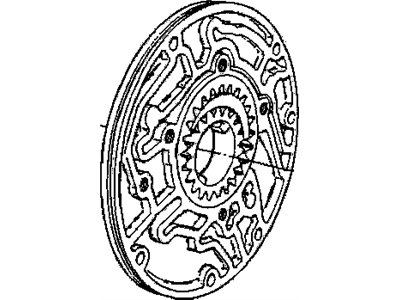
- Other Name: BODY, Transmission Oil Pump
- Item Weight: 7.20 Pounds
- Condition: New
- Fitment Type: Direct Replacement
- SKU: 8638922
- Warranty: This genuine part is guaranteed by GM's factory warranty.
 Product Specifications
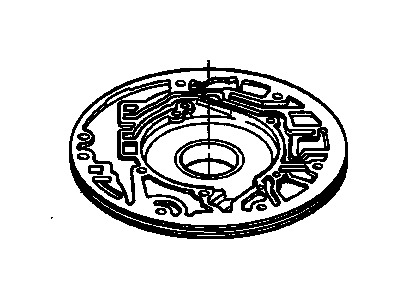
- Other Name: BODY, Transmission Oil Pump
- Replaces: 08649964, 8649964
- Item Weight: 5.40 Pounds
- Item Dimensions: 11.3 x 10.7 x 3.5 inches
- Condition: New
- Fitment Type: Direct Replacement
- SKU: 24230108
- Warranty: This genuine part is guaranteed by GM's factory warranty.
 Product Specifications
- Other Name: BODY, Transmission Oil Pump
- Item Weight: 4.70 Pounds
- Item Dimensions: 9.5 x 10.1 x 2.6 inches
- Condition: New
- Fitment Type: Direct Replacement
- SKU: 8655985
- Warranty: This genuine part is guaranteed by GM's factory warranty.
- Product Specifications
- Other Name: PUMP, Transmission Oil Pump
- Item Weight: 10.70 Pounds
- Item Dimensions: 9.6 x 9.3 x 5.6 inches
- Condition: New
- Fitment Type: Direct Replacement
- SKU: 8655986
- Warranty: This genuine part is guaranteed by GM's factory warranty.
1986 Chevrolet Caprice Oil Pump
We are your prime source for competitively priced and high-quality OEM 1986 Chevrolet Caprice Oil Pump. We provide you with parts that will allow you to save a lot of money without sacrificing quality. All our OEM parts are backed by the manufacturer's warranty and shipped out at a swift rate.
1986 Chevrolet Caprice Oil Pump Parts Questions & Experts Answers
- Q:How to install and check the oil pump assembly in V6 engine on 1986 Chevrolet Caprice?Posted by Kjdfsa K.A:Lubricate the pressure relief valve and spring, then install them in the bore of the oil pump case, followed by the cap and gasket, ensuring they are torque-tightened to specifications. Insert the oil pump gear and shaft into the oil pump body section of the timing chain cover to check the gear end clearance and side clearance; place a straightedge over the gears to measure the clearance between it and the gasket surface, which should be 0.002 to 0.006 in. If it is less than 0.002, measure the gears and pocket to identify the out-of-specification component. Check the oil pump clearance, which should be 0.0025 to 0.0050 in.; if it exceeds 0.0050, measure the gears and pocket to find the issue. Use a straightedge across the oil pump cover face to check for flatness, inserting a feeler gauge between the straightedge and the pump cover, and replace the cover if the clearance is 0.001 in or more. If all clearances are satisfactory, remove the gears and pack the pocket with petroleum jelly, avoiding chassis lube. Re-install the gears, ensuring petroleum jelly fills every cavity of the gear pocket and between the teeth, as the pump may not prime if the pocket is not adequately packed. Install the pump cover assembly screws, tightening them alternately and evenly to the specified torque. Finally, install the oil filter and check the oil level with the dipstick, monitoring the oil pressure gauge or warning light during initial start-up and driving; if a lack of oil pressure is indicated, shut off the engine and inspect all work.Answered by GM Parts Specialist Fernando / Jun 22, 2025
Related 1986 Chevrolet Caprice Parts
 1986 Chevrolet Caprice Oil Filter
 1986 Chevrolet Caprice Crankshaft Thrust Washer Set
 1986 Chevrolet Caprice Oil Pressure Switch
 1986 Chevrolet Caprice Drain Plug
 1986 Chevrolet Caprice Crankshaft
 1986 Chevrolet Caprice Oil Pan
 1986 Chevrolet Caprice Oil Pan Gasket
 1986 Chevrolet Caprice Crankshaft Pulley
 1986 Chevrolet Caprice Dipstick Tube
 1986 Chevrolet Caprice Rod Bearing
 1986 Chevrolet Caprice Dipstick