
My Garage
My Account
Cart
Genuine 1986 Chevrolet El Camino Fuel Tank
Gas Tank- Select Vehicle by Model
- Select Vehicle by VIN
Select Vehicle by Model
orMake
Model
Year
Select Vehicle by VIN
For the most accurate results, select vehicle by your VIN (Vehicle Identification Number).
1 Fuel Tank found
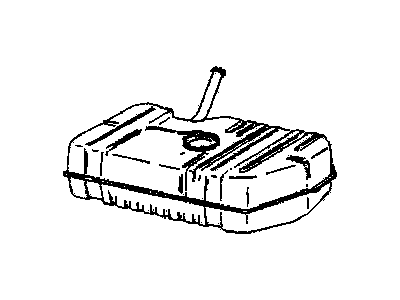 Product Specifications
- Other Name: TANK, Fuel; Fuel Tank
- Item Weight: 24.20 Pounds
- Item Dimensions: 36.4 x 30.9 x 7.1 inches
- Condition: New
- Fitment Type: Direct Replacement
- SKU: 14037929
- Warranty: This genuine part is guaranteed by GM's factory warranty.
1986 Chevrolet El Camino Fuel Tank
We are your prime source for competitively priced and high-quality OEM 1986 Chevrolet El Camino Fuel Tank. We provide you with parts that will allow you to save a lot of money without sacrificing quality. All our OEM parts are backed by the manufacturer's warranty and shipped out at a swift rate.
1986 Chevrolet El Camino Fuel Tank Parts Questions & Experts Answers
- Q:How to remove and install the fuel tank on 1986 Chevrolet El Camino?Posted by Kristyne F.A:The fuel tank, located between the frame rails and behind the rear axle, is held in place by two steel straps. These straps are hinged at either the front or the rear end, with a bolt through the hinge, and secured at the opposite end with a bolt and nut assembly. Before performing any servicing operations involving the fuel supply, disconnect the battery. Also, disconnect the fuel gauge wiring to the top of the tank. On early models, the wire should be disconnected from inside the trunk and then fed through the trunk floorpan with the rubber grommet pushed out of place. The vehicle should be raised for access underneath the car. All fuel from the tank should be drained into a clean container. Since there are no drain plugs for the Chevelle, it is necessary to siphon the fuel through the filler neck, or drain the fuel through the fuel feed line running to the carburetor. Do not start the siphoning process with your mouth as serious personal injury could result. Also, ensure that no open flames, lighted cigarettes or sparks are in the area as they could ignite the fuel vapor. Disconnect the fuel hose or vapor return hose at the top of the tank. Remove the gauge ground wire attached to the underbody. Disconnect the filler neck at the tank. Support the bottom of the tank using an adjustable jack and a piece of wood to spread the load. Remove the tank strap bolts and carefully lower the tank, checking that all connections are free of the tank as it is lowered. Installation is a reversal of the removal process. Make sure all electrical connections are clean and properly installed and all hoses are tightened securely to the tank.Answered by GM Parts Specialist Bob / May 06, 2026
Related 1986 Chevrolet El Camino Parts
 1986 Chevrolet El Camino Fuel Pump
 1986 Chevrolet El Camino Fuel Filter
 1986 Chevrolet El Camino Fuel Tank Sending Unit
 1986 Chevrolet El Camino Gas Cap