
My Garage
My Account
Cart
Genuine 1986 Chevrolet El Camino Water Pump
H2O Pump- Select Vehicle by Model
- Select Vehicle by VIN
Select Vehicle by Model
orMake
Model
Year
Select Vehicle by VIN
For the most accurate results, select vehicle by your VIN (Vehicle Identification Number).
2 Water Pumps found
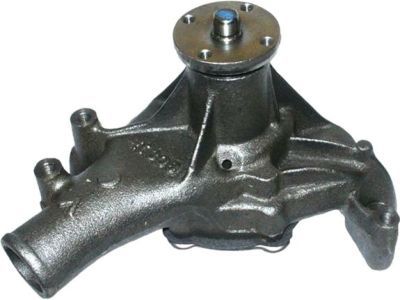
1986 Chevrolet El Camino Water Pump
Part Number: 12685965$141.59 MSRP: $278.43You Save: $136.84 (50%)Product Specifications- Other Name: Pump Kit - Water; Pump Assembly, Water Pump, Water Pump Assembly
- Replaces: 12522033, 12529305, 88894341
- Item Weight: 16.10 Pounds
- Item Dimensions: 13.9 x 8.6 x 8.6 inches
- Condition: New
- Fitment Type: Direct Replacement
- SKU: 12685965
- Warranty: This genuine part is guaranteed by GM's factory warranty.
 Product Specifications
- Other Name: Pump Kit, Water (Free Of Asbestos); Pump, Water Pump, Water Pump Assembly
- Item Weight: 12.40 Pounds
- Item Dimensions: 13.4 x 8.6 x 8.4 inches
- Condition: New
- Fitment Type: Direct Replacement
- SKU: 12337519
- Warranty: This genuine part is guaranteed by GM's factory warranty.
1986 Chevrolet El Camino Water Pump
We are your prime source for competitively priced and high-quality OEM 1986 Chevrolet El Camino Water Pump. We provide you with parts that will allow you to save a lot of money without sacrificing quality. All our OEM parts are backed by the manufacturer's warranty and shipped out at a swift rate.
1986 Chevrolet El Camino Water Pump Parts Questions & Experts Answers
- Q:What are the ways to check the operation of the water pump while it is still installed on 1986 Chevrolet El Camino?Posted by Wegner M.A:A failure in the water pump can cause serious engine damage due to overheating as the pump will not be able to circulate cooled water through the engine. There are three ways in which to check the operation of the water pump while it is still installed on the engine. If the pump is suspect, it should be replaced with a new or factory-rebuilt unit. With the engine warmed up to normal operating temperature, squeeze the upper radiator hose. If the water pump is working properly, a pressure surge should be felt as the hose is released. Water pumps are equipped with 'weep' or vent holes. If a failure occurs to the bladder of the pump, small amounts of water will leak from these 'weep' holes. In most cases, it will be necessary to use a flashlight from under the car to see evidence of leakage from this point in the pump body. If the water pump shaft bearings fail there may be a squealing sound at the front of the engine while it is running. Shaft wear can be felt if the water pump pulley is forced up and down. Do not mistake drive belt slippage, which also causes a squealing sound, for water pump failure.Answered by GM Parts Specialist Nicholas / Dec 31, 2025
Related 1986 Chevrolet El Camino Parts
 1986 Chevrolet El Camino Power Steering Pump
 1986 Chevrolet El Camino Radiator
 1986 Chevrolet El Camino Coolant Temperature Sensor
 1986 Chevrolet El Camino Thermostat
 1986 Chevrolet El Camino Water Pump Pulley
 1986 Chevrolet El Camino Water Pump Gasket
 1986 Chevrolet El Camino Thermostat Gasket
 1986 Chevrolet El Camino Coolant Reservoir Cap