
My Garage
My Account
Cart
Genuine 1986 Chevrolet Nova Cylinder Head
Head- Select Vehicle by Model
- Select Vehicle by VIN
Select Vehicle by Model
orMake
Model
Year
Select Vehicle by VIN
For the most accurate results, select vehicle by your VIN (Vehicle Identification Number).
1 Cylinder Head found
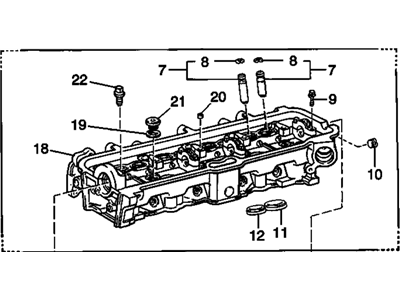 Product Specifications
- Other Name: Head Assembly, Cylinder; Cylinder Head
- Item Weight: 20.10 Pounds
- Item Dimensions: 22.7 x 10.2 x 6.3 inches
- Condition: New
- Fitment Type: Direct Replacement
- SKU: 94843884
- Warranty: This genuine part is guaranteed by GM's factory warranty.
1986 Chevrolet Nova Cylinder Head
We are your prime source for competitively priced and high-quality OEM 1986 Chevrolet Nova Cylinder Head. We provide you with parts that will allow you to save a lot of money without sacrificing quality. All our OEM parts are backed by the manufacturer's warranty and shipped out at a swift rate.
1986 Chevrolet Nova Cylinder Head Parts Questions & Experts Answers
- Q:How to assemble Cylinder Head on 1986 Chevrolet Nova?Posted by Richie O.A:Apply engine oil to the stem of No. 1 valve and insert it in its correct port. Set the valve spring shim, spring, damper, valve shield and cap for the intake valve or rotator for the exhaust valve in place. Using a suitable valve spring compressor, compress the spring and install the oil seal in the lower groove of the valve stem, ensuring that it is seated squarely. Insert the valve locks and release the spring compressor, ensuring that the locks seat properly in the upper groove of the stem. For the big-block version, install the valve spring shim on the valve spring seat and then install a new valve stem oil seal over the valve and valve guide. Set the valve spring, damper, and valve cap in place, then use a suitable compressor to compress the spring, noting that the valve springs are wound closer at one end, so install the more closely wound end next to the head. Insert the valve locks and release the spring compressor, ensuring that the locks seat properly in the stem groove. Install the remaining valves in their correct positions following the same procedure. Using a soft-faced mallet, tap the end of each valve stem sharply to settle the valve components, then measure the installed height of the valve spring using a narrow scale passed down beside the spring to rest on the valve spring seat. Measure the height of the upper surface of the spring and compare it with the specified measurement. If the specified height is exceeded, install a valve spring seat shim of approximately 1/16 inch thickness, ensuring that the installed height is never less than specified.Answered by GM Parts Specialist Xavier / Sep 02, 2022


