
My Garage
My Account
Cart
Genuine 1997 Chevrolet K1500 Crankshaft
Crank Shaft- Select Vehicle by Model
- Select Vehicle by VIN
Select Vehicle by Model
orMake
Model
Year
Select Vehicle by VIN
For the most accurate results, select vehicle by your VIN (Vehicle Identification Number).
2 Crankshafts found
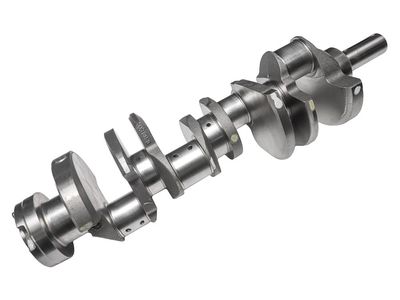
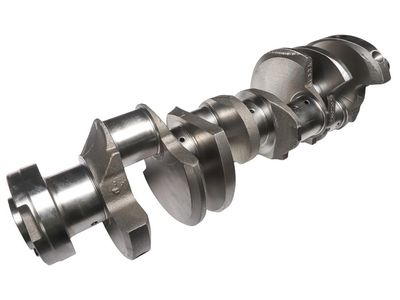
1997 Chevrolet K1500 Crankshaft
Part Number: 23502596$1149.22 MSRP: $1475.06You Save: $325.84 (23%)Ships in 1-3 Business DaysProduct Specifications- Other Name: Crankshaft, Engine; Crankshaft
- Item Weight: 81.30 Pounds
- Item Dimensions: 28.7 x 9.5 x 8.9 inches
- Condition: New
- Fitment Type: Direct Replacement
- SKU: 23502596
- Warranty: This genuine part is guaranteed by GM's factory warranty.
1997 Chevrolet K1500 Crankshaft
Part Number: 10243070$1455.51 MSRP: $2408.97You Save: $953.46 (40%)Ships in 1-3 Business DaysProduct Specifications- Other Name: Crankshaft, Engine; Crankshaft
- Replaced by: 12691722
- Item Weight: 57.00 Pounds
- Item Dimensions: 26.5 x 8.2 x 6.1 inches
- Condition: New
- Fitment Type: Direct Replacement
- SKU: 10243070
- Warranty: This genuine part is guaranteed by GM's factory warranty.
1997 Chevrolet K1500 Crankshaft
We are your prime source for competitively priced and high-quality OEM 1997 Chevrolet K1500 Crankshaft. We provide you with parts that will allow you to save a lot of money without sacrificing quality. All our OEM parts are backed by the manufacturer's warranty and shipped out at a swift rate.
1997 Chevrolet K1500 Crankshaft Parts Questions & Experts Answers
- Q:How to remove burrs from the crankshaft oil holes and check for damage on 1997 Chevrolet K1500?Posted by Britton D.A:Remove all burrs from the crankshaft oil holes with a stone, file or scraper, chamfering the oil holes to remove sharp edges that might gouge or scratch the new bearings. Clean the crankshaft with solvent and dry it with compressed air, if available. Be sure to clean the oil holes with a stiff brush and flush them with solvent. Wear eye protection when using compressed air. Check the main and connecting rod bearing journals for uneven wear, scoring, pits and cracks. Also, check the rest of the crankshaft for cracks and other damage. Rub a penny across each journal several times. If a journal picks up copper from the penny, it's too rough and must be reground. If the seals have worn grooves in the crankshaft journals, or if the seal journals are nicked or scratched, the new seal(s) will leak. The crankshaft should be magnafluxed to reveal hidden cracks-an automotive machine shop will handle the procedure. Using a micrometer, measure the diameter of the main and connecting rod journals and compare the results to the Specifications. By measuring the diameter at a number of points around each journal's circumference, you'll be able to determine whether or not the journal is out-of-round. Take the measurement at each end of the journal, near the crank throws, to determine if the journal is tapered. If the crankshaft journals are damaged, tapered, out-of-round or worn beyond the limits given in the Specifications, have the crankshaft reground by an automotive machine shop. Be sure to use the correct size bearing inserts if the crankshaft is reconditioned. Examine the main and rod bearing inserts.Answered by GM Parts Specialist Henry / Nov 16, 2025
Related 1997 Chevrolet K1500 Parts
 1997 Chevrolet K1500 Crankshaft Thrust Washer Set
 1997 Chevrolet K1500 Piston Ring
 1997 Chevrolet K1500 Camshaft
 1997 Chevrolet K1500 Oil Pan Gasket
 1997 Chevrolet K1500 Oil Pan
 1997 Chevrolet K1500 Oil Pump
 1997 Chevrolet K1500 Oil Pump Gasket
 1997 Chevrolet K1500 Crankshaft Pulley
 1997 Chevrolet K1500 Rod Bearing
 1997 Chevrolet K1500 Crankshaft Gear
 1997 Chevrolet K1500 Cam Gear