
My Garage
My Account
Cart
Genuine 1997 Oldsmobile Cutlass Cylinder Head
Head- Select Vehicle by Model
- Select Vehicle by VIN
Select Vehicle by Model
orMake
Model
Year
Select Vehicle by VIN
For the most accurate results, select vehicle by your VIN (Vehicle Identification Number).
1 Cylinder Head found
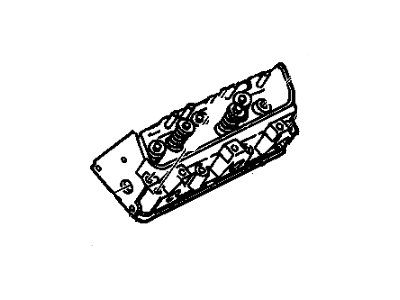 Product Specifications
- Other Name: Head Asm,Cyl ; Head, Engine Cylinder; Cylinder Head
- Replaces: 24503767
- Item Weight: 15.70 Pounds
- Item Dimensions: 16.8 x 8.5 x 9.0 inches
- Condition: New
- Fitment Type: Direct Replacement
- Require Quantity: 2
- SKU: 12575061
- Warranty: This genuine part is guaranteed by GM's factory warranty.
1997 Oldsmobile Cutlass Cylinder Head
We are your prime source for competitively priced and high-quality OEM 1997 Oldsmobile Cutlass Cylinder Head. We provide you with parts that will allow you to save a lot of money without sacrificing quality. All our OEM parts are backed by the manufacturer's warranty and shipped out at a swift rate.
1997 Oldsmobile Cutlass Cylinder Head Parts Questions & Experts Answers
- Q:How to Install a New Cylinder Head in V6 engine on 1997 Oldsmobile Cutlass?Posted by Erin Q.A:Thoroughly clean off the engine block surface, ensuring that no foreign material, dirt, or gasket pieces have fallen into the engine cylinder bores, bolt holes, or valve lifter area, and use an air hose to clean out the bolt holes if available. Install the new head gasket with the bead side down toward the cylinder block, using the dowel pins in the block to locate and hold it in place, taking care not to kink or damage the gasket surface. Clean the gasket surface of the cylinder head and carefully set it in place on the engine block dowel pins. Apply a heavy-body thread sealer on the head bolts since they pass through the engine coolant, and ensure the torque wrench is accurate to prevent uneven tightening that can distort the cylinder bores, leading to compression loss and excessive oil consumption. Install the head bolts and tighten them gradually about three times around in the specified sequence, followed by a final torque in the same order, adhering to torque specifications. Install the exhaust manifolds on the heads and tighten them to the specified torque. Wipe the rocker arm shaft and the bosses of the cylinder head with a clean, lint-free cloth to ensure cleanliness. Remove the pushrods from their numbered rack or cardboard and install them in their proper positions, locating each pushrod in its rocker arm seat by tilting the rocker arm toward it. Tighten the rocker arm shaft assembly bolts gradually and torque-tighten them to specifications. Install the spark plug wires on the rocker arm cover studs and connect the wires using pieces of tape as a guide. Install the intake manifold as described previously, then reinstall all components removed during cylinder head removal and tighten all drivebelts. Refill the engine with coolant, start the engine, and check for leaks; after warming up the engine, recheck the cylinder head bolt torque. Finally, install the rocker arm cover and new gasket, torque-tightening the rocker arm cover bolts to specifications.Answered by GM Parts Specialist Jose / Oct 15, 2022
Related 1997 Oldsmobile Cutlass Parts
 1997 Oldsmobile Cutlass Rocker Arm
 1997 Oldsmobile Cutlass Rocker Shaft Spring Kit
 1997 Oldsmobile Cutlass Timing Cover
 1997 Oldsmobile Cutlass Camshaft
 1997 Oldsmobile Cutlass Intake Valve
 1997 Oldsmobile Cutlass Exhaust Valve