
My Garage
My Account
Cart
Genuine 1999 Pontiac Grand Prix Piston
Engine Pistons- Select Vehicle by Model
- Select Vehicle by VIN
Select Vehicle by Model
orMake
Model
Year
Select Vehicle by VIN
For the most accurate results, select vehicle by your VIN (Vehicle Identification Number).
5 Pistons found
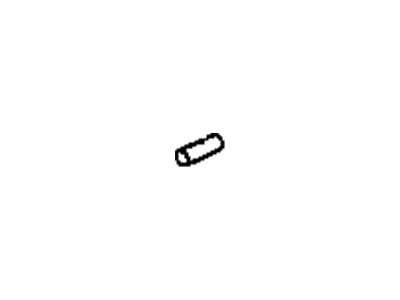
1999 Pontiac Grand Prix Piston Assembly
Part Number: 12539086$43.95 MSRP: $279.78You Save: $235.83 (85%)Ships in 1-2 Business DaysProduct Specifications- Other Name: Piston, Engine Piston
- Item Weight: 1.50 Pounds
- Item Dimensions: 4.8 x 4.6 x 4.6 inches
- Condition: New
- Fitment Type: Direct Replacement
- Require Quantity: 6
- SKU: 12539086
- Warranty: This genuine part is guaranteed by GM's factory warranty.
- Product Specifications
- Other Name: PISTON, Engine Piston; Piston
- Item Weight: 1.50 Pounds
- Item Dimensions: 6.8 x 4.5 x 4.6 inches
- Condition: New
- Fitment Type: Direct Replacement
- Require Quantity: 6
- SKU: 24508726
- Warranty: This genuine part is guaranteed by GM's factory warranty.
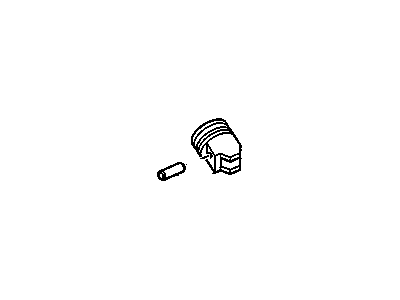
1999 Pontiac Grand Prix Piston (WithPinion)
Part Number: 12539085$105.75 MSRP: $163.76You Save: $58.01 (36%)Product Specifications- Other Name: PISTON, Engine Piston; Piston
- Item Weight: 1.60 Pounds
- Item Dimensions: 7.0 x 4.5 x 4.5 inches
- Condition: New
- Fitment Type: Direct Replacement
- SKU: 12539085
- Warranty: This genuine part is guaranteed by GM's factory warranty.
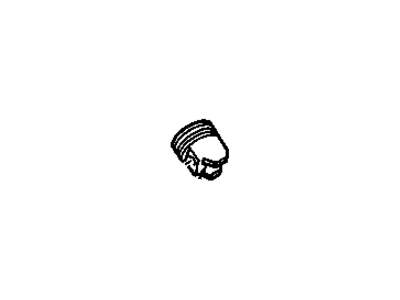 Product Specifications
- Other Name: PISTON, Engine Piston; Piston
- Replaces: 12537408, 89017810
- Item Weight: 1.40 Pounds
- Item Dimensions: 7.1 x 4.3 x 4.5 inches
- Condition: New
- Fitment Type: Direct Replacement
- SKU: 19299371
- Warranty: This genuine part is guaranteed by GM's factory warranty.
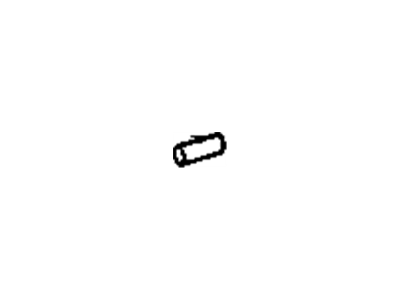 Product Specifications
- Other Name: PISTON, Engine Piston
- Item Weight: 1.60 Pounds
- Item Dimensions: 5.5 x 4.5 x 5.8 inches
- Condition: New
- Fitment Type: Direct Replacement
- Require Quantity: 6
- SKU: 89017421
- Warranty: This genuine part is guaranteed by GM's factory warranty.
1999 Pontiac Grand Prix Piston
We are your prime source for competitively priced and high-quality OEM 1999 Pontiac Grand Prix Piston. We provide you with parts that will allow you to save a lot of money without sacrificing quality. All our OEM parts are backed by the manufacturer's warranty and shipped out at a swift rate.
1999 Pontiac Grand Prix Piston Parts Questions & Experts Answers
- Q:What steps must be taken to prepare piston/connecting rod assemblies for inspection on 1999 Pontiac Grand Prix?Posted by Roge S.A:The inspection process cannot be performed on the piston/connecting rod assemblies unless cleaned and fitted with new rings as the originals are replaced as part of the procedure. Taking considerable care, remove the piston rings with the aid of a piston ring installation tool that does not mar the faces of the rings in any way. After most deposits have been removed, use a junkyard handheld wire brush or fine emery cloth to scrape a thin layer of carbon from the top of the piston in order to get a shiny surface, do not use wire brush mounted in a drill motor as this will erode the top of the piston which is made of soft material. When the carbonaceous deposits are to be removed from the ring grooves piston ring groove cleaning tool should be used, or a piece remove from the old ring may be used provided no portion of the metal or the grooves are removed in the process. The deposits should then be washed off with solvent and if there is available compressed air, then dry the piston/rod assemblies. That only applies if the pistons and cylinder walls are not damaged and the engine block has not been rebored; new pistons are in most often not needed, but new piston rings are always essential during the rebuild. The pistons should be thoroughly checked for ring travel for cracks round the skirt, pin bosses and ring lands and for scores, scratches, holes at the piston crown, and burned areas, because these indicate overheating or abnormal combustion are signs and should lead to a check of the cooling and lubrication system. Pitting is corrosion, which in this case can be attributed to leakage of coolants into the combustion chamber or crankcase and should therefore be investigated in order to avoid such in the rebuilt engines. Check the piston ring side clearance with a new piston ring placed in every groove, using the thin feeler gauge and do it at different points along the groove; always fit the right ring to the groove. The clearance between a piston and bore must also be correct with some standard measurement depending on the type of engine; the engineer must compare the bore of the cylinder and the diameter of the piston. Clearance is obtained from the difference of the bore diameter and piston diameter; if it is off the standard, rebore the block and get new pistons as well as rings. It is advisable to twist the piston and the rod and if there is considerable play then it is a sign that they are worn out and would need adjustment in most cases they will need to be resized in an automotive machine shop and new pins fitted. In the case when pistons are to be separated from the connecting rods, they should be taken to an automotive machine shop to check for bend and twist and in general, measuring should be done with special equipment and disassembling should be avoided where not necessary due to fitting of new components.Answered by GM Parts Specialist Julian / Feb 20, 2022
Related 1999 Pontiac Grand Prix Parts
 1999 Pontiac Grand Prix Crankshaft Thrust Washer Set
 1999 Pontiac Grand Prix Drain Plug
 1999 Pontiac Grand Prix Crankshaft
 1999 Pontiac Grand Prix Crankshaft Gear
 1999 Pontiac Grand Prix Alternator Bracket
 1999 Pontiac Grand Prix Automatic Transmission Seal
 1999 Pontiac Grand Prix Belt Tensioner Bolt
 1999 Pontiac Grand Prix Brake Caliper Bolt
 1999 Pontiac Grand Prix Brake Caliper Bracket