
My Garage
My Account
Cart
Genuine 2001 Chevrolet Tracker Cylinder Head
Head- Select Vehicle by Model
- Select Vehicle by VIN
Select Vehicle by Model
orMake
Model
Year
Select Vehicle by VIN
For the most accurate results, select vehicle by your VIN (Vehicle Identification Number).
2 Cylinder Heads found
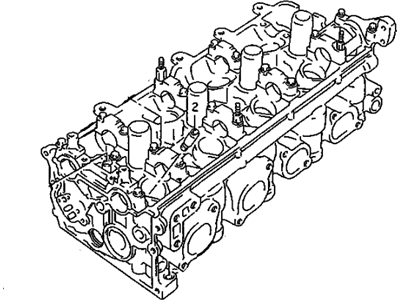 Product Specifications
- Other Name: Head Asm,Cylinder (On Esn) ; Head, Engine Cylinder; Cylinder Head
- Replaces: 91177126, 91175492
- Item Weight: 29.30 Pounds
- Item Dimensions: 19.5 x 9.5 x 8.6 inches
- Condition: New
- Fitment Type: Direct Replacement
- SKU: 91177444
- Warranty: This genuine part is guaranteed by GM's factory warranty.
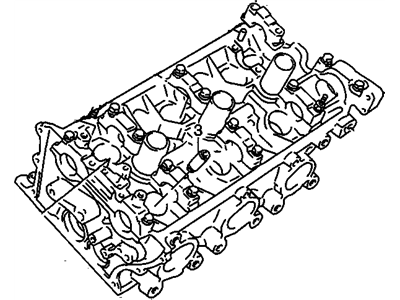 Product Specifications
- Other Name: Head Asm,Cylinder Lh (On Esn) ; Head, Engine Cylinder; Cylinder Head
- Item Weight: 21.00 Pounds
- Item Dimensions: 17.0 x 9.9 x 8.9 inches
- Condition: New
- Fitment Type: Direct Replacement
- SKU: 91177443
- Warranty: This genuine part is guaranteed by GM's factory warranty.
2001 Chevrolet Tracker Cylinder Head
We are your prime source for competitively priced and high-quality OEM 2001 Chevrolet Tracker Cylinder Head. We provide you with parts that will allow you to save a lot of money without sacrificing quality. All our OEM parts are backed by the manufacturer's warranty and shipped out at a swift rate.
2001 Chevrolet Tracker Cylinder Head Parts Questions & Experts Answers
- Q:How to disassemble and inspect cylinder heads on 2001 Chevrolet Tracker?Posted by Jarleen K.A:New and rebuilt cylinder heads are usually available for most engines at dealerships and auto parts stores. Because some specialized tools are needed to disassemble and inspect the cylinder head, and because some parts may not be available, It might be more practical and economical to buy a replacement head instead of disassembling, inspecting and reconditioning the old head. For SOHC engines, remove the rocker arms and shafts from the cylinder head. Label the parts or store them separately so they can be reinstalled in their original locations. Remove the distributor case from the cylinder head. On 8 valve engines, gently guide the camshaft out of the cylinder head. Before the valves are removed, arrange to label and store them, along with their related components, so they can be kept separate and reinstalled in the same valve guides they are removed from. Compress the springs on the first valve with a spring compressor and remove the keepers. Carefully release the valve spring compressor and remove the retainer, the spring and the spring seat. Pull the valve out of the head, then remove the oil seal from the guide. Repeat the procedure for the remaining valves. Once the valves and related components have been removed and stored in an organized manner, the head should be thoroughly cleaned and inspected. If a complete engine overhaul is being done, finish the engine disassembly procedures before beginning the cylinder head cleaning and inspection process. For DOHC engines, remove the camshafts and lifters. The remainder of disassembly is similar to the disassembly procedure for SOHC engines except that you'll need a different kind of valve spring compressor. Be very careful not to nick or otherwise damage the lifter bores when compressing the valve springs. There are two valve springs per valve on DOHC engines. Be sure to keep each valve spring pair together. Also, note that each spring has a "top" and "bottom." The largepitch end is the top of the spring; the smallpitch end is the bottom.Answered by GM Parts Specialist Raul / Apr 13, 2022
Related 2001 Chevrolet Tracker Parts
 2001 Chevrolet Tracker Rocker Arm
 2001 Chevrolet Tracker Timing Cover
 2001 Chevrolet Tracker Camshaft
 2001 Chevrolet Tracker Rocker Shaft Spring Kit
 2001 Chevrolet Tracker Intake Valve
 2001 Chevrolet Tracker Exhaust Valve
 2001 Chevrolet Tracker Rocker Guide