
My Garage
My Account
Cart
Genuine 2004 Chevrolet Trailblazer Axle Shaft
Car Axle Shaft- Select Vehicle by Model
- Select Vehicle by VIN
Select Vehicle by Model
orMake
Model
Year
Select Vehicle by VIN
For the most accurate results, select vehicle by your VIN (Vehicle Identification Number).
6 Axle Shafts found
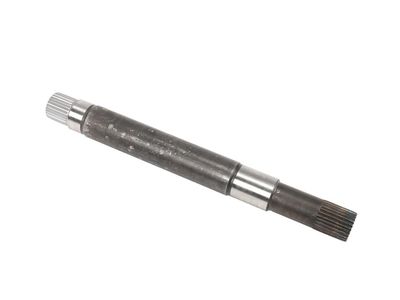
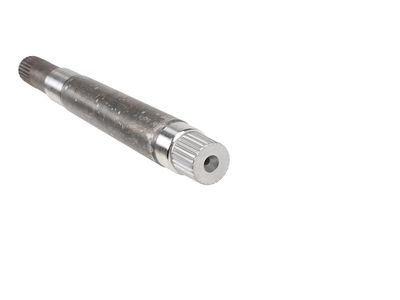
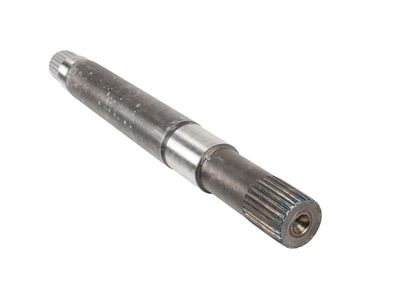

2004 Chevrolet Trailblazer Axle Shafts
Part Number: 12479125$376.25 MSRP: $593.06You Save: $216.81 (37%)Ships in 1-3 Business DaysProduct Specifications- Other Name: Shaft, Front Axle; Axle Shaft, Intermed Shaft
- Position: Front Inner
- Item Weight: 4.70 Pounds
- Item Dimensions: 13.5 x 4.5 x 4.4 inches
- Condition: New
- Fitment Type: Direct Replacement
- SKU: 12479125
- Warranty: This genuine part is guaranteed by GM's factory warranty.


2004 Chevrolet Trailblazer Axle Shaft
Part Number: 19133413$359.88 MSRP: $571.95You Save: $212.07 (38%)Product Specifications- Other Name: Shaft, Rear Axle Drive; Axle, Axle Shaft
- Position: Rear Passenger Side
- Replaces: 12479161
- Item Weight: 19.30 Pounds
- Item Dimensions: 34.0 x 6.6 x 6.6 inches
- Condition: New
- Fitment Type: Direct Replacement
- SKU: 19133413
- Warranty: This genuine part is guaranteed by GM's factory warranty.
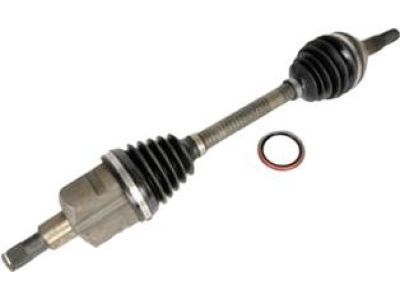
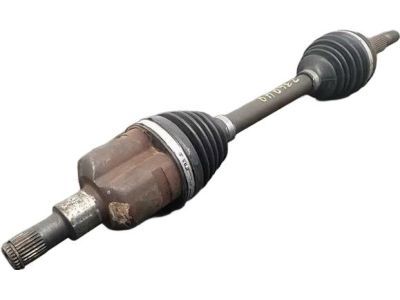
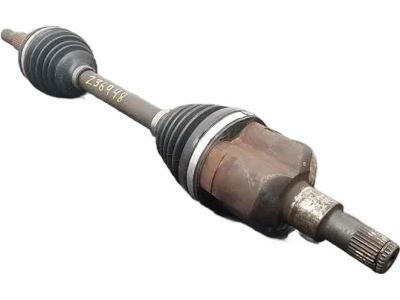
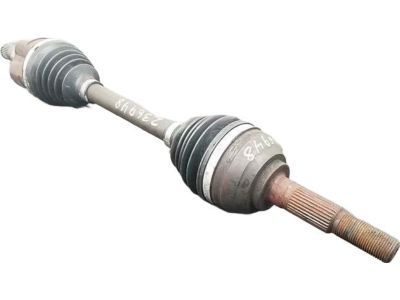

2004 Chevrolet Trailblazer Front Wheel Drive Shaft Kit
Part Number: 26079789$390.26 MSRP: $615.16You Save: $224.90 (37%)Product Specifications- Other Name: Shaft Kit,Front Wheel Drive; Axle Assembly
- Position: Front
- Item Weight: 19.80 Pounds
- Item Dimensions: 5.2 x 5.2 x 36.0 inches
- Condition: New
- Fitment Type: Direct Replacement
- SKU: 26079789
- Warranty: This genuine part is guaranteed by GM's factory warranty.
- Product Specifications
- Other Name: Shaft,Rear Axle (Lh); Axle, Axle Shaft
- Position: Rear Driver Side
- Replaces: 12479160
- Item Weight: 19.70 Pounds
- Item Dimensions: 33.9 x 7.1 x 7.1 inches
- Condition: New
- Fitment Type: Direct Replacement
- SKU: 19133412
- Warranty: This genuine part is guaranteed by GM's factory warranty.
 Product Specifications
- Other Name: Shaft,Rear Axle ; Shaft, Rear Axle Drive; Axle Shaft
- Position: Rear
- Replaces: 12479016
- Item Weight: 19.40 Pounds
- Item Dimensions: 34.3 x 6.8 x 7.0 inches
- Condition: New
- Fitment Type: Direct Replacement
- SKU: 19133409
- Warranty: This genuine part is guaranteed by GM's factory warranty.
 Product Specifications
- Other Name: Shaft,Rear Axle ; Shaft, Rear Axle Drive; Axle Shaft
- Position: Rear
- Replaces: 12479017
- Item Weight: 19.80 Pounds
- Item Dimensions: 34.0 x 6.9 x 6.7 inches
- Condition: New
- Fitment Type: Direct Replacement
- SKU: 19133410
- Warranty: This genuine part is guaranteed by GM's factory warranty.
2004 Chevrolet Trailblazer Axle Shaft
We are your prime source for competitively priced and high-quality OEM 2004 Chevrolet Trailblazer Axle Shaft. We provide you with parts that will allow you to save a lot of money without sacrificing quality. All our OEM parts are backed by the manufacturer's warranty and shipped out at a swift rate.
2004 Chevrolet Trailblazer Axle Shaft Parts Questions & Experts Answers
- Q:How to remove and install the rear axle shaft on 2004 Chevrolet Trailblazer?Posted by Edas Z.A:Loosen the rear wheel lug nuts, raise the rear of the vehicle, and support it securely on jack stands placed under the frame rails, blocking the front wheels to prevent rolling. Remove the rear wheels, then position a jack under the rear axle differential housing and raise it slightly. Disconnect the driveshaft from the rear axle pinion flange and secure it out of the way with a piece of wire from the underbody. For models with air springs, depressurize the rear suspension. Disconnect the shock absorbers at their lower mounts, the vent hose from the fitting on the axle housing, and the brake hose from the junction block on the axle housing, plugging the hose to prevent fluid leakage. Remove the brake calipers and discs, then disconnect the parking brake cables from the actuating levers and brackets. Remove the stabilizer bar and the rear suspension springs, followed by detaching the rear suspension track bar and upper and lower control arms from the axle. Lower the jack under the differential and remove the rear axle assembly from under the vehicle. For installation, reverse the removal steps, tightening the U-joint strap bolts and all suspension and brake fasteners to the specified torque values. Finally, bleed the brakes and install the wheels, tightening the lug nuts to the appropriate torque.Answered by GM Parts Specialist Syed / Oct 10, 2022
Related 2004 Chevrolet Trailblazer Parts
 2004 Chevrolet Trailblazer Wheel Bearing
 2004 Chevrolet Trailblazer Transmission Assembly
 2004 Chevrolet Trailblazer Torque Converter
 2004 Chevrolet Trailblazer Slip Yoke
 2004 Chevrolet Trailblazer Transmission Pan
 2004 Chevrolet Trailblazer Output Shaft Bearing
 2004 Chevrolet Trailblazer Transmission Gasket
 2004 Chevrolet Trailblazer Input Shaft Bearing
 2004 Chevrolet Trailblazer Pinion Washer