
My Garage
My Account
Cart
Genuine 2013 Chevrolet Corvette CV Boot
Axle Boot- Select Vehicle by Model
- Select Vehicle by VIN
Select Vehicle by Model
orMake
Model
Year
Select Vehicle by VIN
For the most accurate results, select vehicle by your VIN (Vehicle Identification Number).
6 CV Boots found

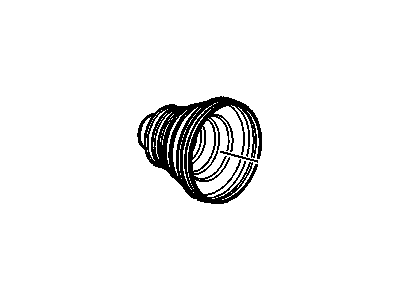
2013 Chevrolet Corvette Boot Kit,Rear Wheel Drive Shaft Outer Cv Joint
Part Number: 19153125$66.80 MSRP: $103.44You Save: $36.64 (36%)Product Specifications- Other Name: BOOT KIT, Rear Axle Universal Joint; Outer Boot
- Position: Rear Outer
- Item Weight: 3.20 Pounds
- Item Dimensions: 9.1 x 8.6 x 4.6 inches
- Condition: New
- Fitment Type: Direct Replacement
- SKU: 19153125
- Warranty: This genuine part is guaranteed by GM's factory warranty.
- Product Specifications
- Other Name: BOOT KIT, Rear Axle Universal Joint; Outer Boot
- Position: Rear Outer
- Item Weight: 3.30 Pounds
- Item Dimensions: 7.4 x 5.3 x 10.4 inches
- Condition: New
- Fitment Type: Direct Replacement
- Require Quantity: 2
- SKU: 88955486
- Warranty: This genuine part is guaranteed by GM's factory warranty.
 Product Specifications
- Other Name: BOOT KIT, Rear Axle Universal Joint; Inner Boot
- Position: Rear Inner
- Item Weight: 1.10 Pounds
- Item Dimensions: 8.7 x 5.1 x 4.7 inches
- Condition: New
- Fitment Type: Direct Replacement
- Require Quantity: 2
- SKU: 89047795
- Warranty: This genuine part is guaranteed by GM's factory warranty.
- Product Specifications
- Other Name: BOOT KIT, Rear Axle Universal Joint; Outer Boot
- Position: Rear Outer
- Item Weight: 0.80 Pounds
- Item Dimensions: 8.4 x 8.6 x 4.4 inches
- Condition: New
- Fitment Type: Direct Replacement
- SKU: 19181705
- Warranty: This genuine part is guaranteed by GM's factory warranty.
- Product Specifications
- Other Name: BOOT KIT, Rear Axle Universal Joint; Inner Boot
- Position: Rear
- Item Weight: 1.30 Pounds
- Item Dimensions: 8.5 x 8.6 x 4.5 inches
- Condition: New
- Fitment Type: Direct Replacement
- SKU: 19181706
- Warranty: This genuine part is guaranteed by GM's factory warranty.
- Product Specifications
- Other Name: BOOT KIT, Rear Axle Universal Joint; Inner Boot
- Position: Rear
- Item Weight: 3.10 Pounds
- Item Dimensions: 7.1 x 5.4 x 10.4 inches
- Condition: New
- Fitment Type: Direct Replacement
- SKU: 19153124
- Warranty: This genuine part is guaranteed by GM's factory warranty.
2013 Chevrolet Corvette CV Boot
We are your prime source for competitively priced and high-quality OEM 2013 Chevrolet Corvette CV Boot. We provide you with parts that will allow you to save a lot of money without sacrificing quality. All our OEM parts are backed by the manufacturer's warranty and shipped out at a swift rate.
2013 Chevrolet Corvette CV Boot Parts Questions & Experts Answers
- Q:How to check the CV Boot and Shock Absorber on 2013 Chevrolet Corvette?Posted by Triple D.A:For detailed illustrations of the steering and suspension components, begin by checking the shock absorbers, pull over the vehicle and stop the engine, switch off, and put the parking brake into operation when checking tire pressures. Apply a downward pressure on the rear left hand side of the vehicle and let go of the same, observe that the body of the vehicle should not continue to oscillate but should settle down to level within one or two bounces. If it still goes up and down or do not come back, then you have a worn or weak shock absorber on your hand. Do the same check at other corners, then lift the car and sustain it with jackstands. Check for leakage along the piston rod area of the shock absorber; a thin layer of oil is permissible but should not exceed a certain level; should the level be high then the shocks will need to be replaced in pairs. Confirm the shocks are not damaged and well-fixed to the vehicle, inspect the top mounts for damage and wear, howsoever replace both together. Subsequently, look for signs of uneven tread wear or over-inflation of the tires. Check for any signs of leakage of the lubricant, condition of the dust boots and tightness of the clamps on the universal joint of the steering shaft and the steering gear housing. Check the tie-rod ends for any preload and look at the other bolts meaning that all rubber bushings in all suspension and steering parts must be checked for looseness and breaking. With an assistant in turning the steering wheel, examine for a clearance, friction, constriction among the steering's connecting parts. For other ball joint wears, competent use of prybar to lift the control arm up and down and find out if there is looseness; we find that most of the time if there is looseness it is attributable to worn ball joint and the remedy is replacement of the whole control arm the ball joints cannot be replaced alone. Last but not least, check the rear CV Boots for any signs of rips or tears in addition to crannies-flexible boots should be examined for cracks; relaxed clamps; loose or leaking boots should be replaced.Answered by GM Parts Specialist Fernando / Feb 25, 2026