
My Garage
My Account
Cart
Genuine 2019 Chevrolet Express Crankshaft Seal
- Select Vehicle by Model
- Select Vehicle by VIN
Select Vehicle by Model
orMake
Model
Year
Select Vehicle by VIN
For the most accurate results, select vehicle by your VIN (Vehicle Identification Number).
5 Crankshaft Seals found
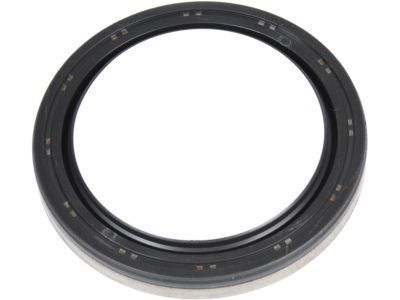
 Product Specifications
- Other Name: Seal, Engine Front Cover & Crankshaft Seal
- Position: Front
- Replaces: 12693255
- Item Weight: 0.40 Pounds
- Item Dimensions: 3.4 x 3.6 x 0.5 inches
- Condition: New
- Fitment Type: Direct Replacement
- SKU: 12634614
- Warranty: This genuine part is guaranteed by GM's factory warranty.
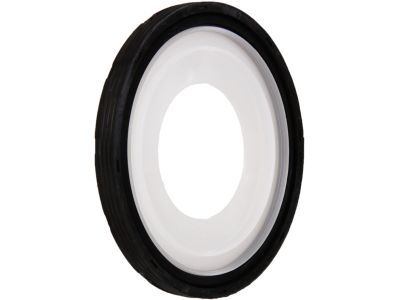
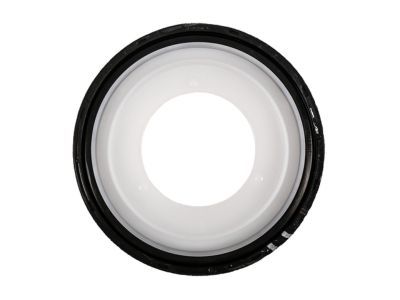
2019 Chevrolet Express Main Seal
Part Number: 89060436$26.58 MSRP: $44.00You Save: $17.42 (40%)Ships in 1-3 Business DaysProduct Specifications- Other Name: Seal Kit, Crankshaft Rear Oil; Crankshaft Seal, Rear Main Seal
- Position: Rear
- Replaces: 12550574, 12585671, 89018162
- Item Weight: 0.50 Pounds
- Item Dimensions: 5.1 x 5.3 x 1.0 inches
- Condition: New
- Fitment Type: Direct Replacement
- SKU: 89060436
- Warranty: This genuine part is guaranteed by GM's factory warranty.
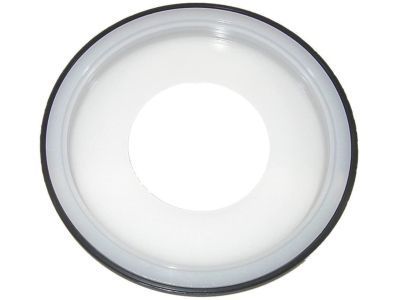
2019 Chevrolet Express Main Seal
Part Number: 12665076$27.66 MSRP: $45.77You Save: $18.11 (40%)Ships in 1-3 Business DaysProduct Specifications- Other Name: Seal, Engine Rear Main Bearing; Rear Main Seal
- Position: Rear
- Replaces: 12634615
- Item Weight: 0.40 Pounds
- Item Dimensions: 5.4 x 5.3 x 5.0 inches
- Condition: New
- Fitment Type: Direct Replacement
- SKU: 12665076
- Warranty: This genuine part is guaranteed by GM's factory warranty.


2019 Chevrolet Express Crank Seal
Part Number: 12642203$12.83 MSRP: $24.20You Save: $11.37 (47%)Ships in 1-2 Business DaysProduct Specifications- Other Name: Seal, Engine Front Cover & Crankshaft Seal; Front Crank Seal
- Position: Front
- Item Weight: 0.40 Pounds
- Item Dimensions: 3.3 x 3.4 x 0.4 inches
- Condition: New
- Fitment Type: Direct Replacement
- SKU: 12642203
- Warranty: This genuine part is guaranteed by GM's factory warranty.

 Product Specifications
- Other Name: Seal, Engine Rear Main Bearing; Rear Main Seal
- Position: Rear
- Item Weight: 0.50 Pounds
- Item Dimensions: 5.4 x 5.3 x 0.4 inches
- Condition: New
- Fitment Type: Direct Replacement
- SKU: 12625417
- Warranty: This genuine part is guaranteed by GM's factory warranty.
2019 Chevrolet Express Crankshaft Seal
We are your prime source for competitively priced and high-quality OEM 2019 Chevrolet Express Crankshaft Seal. We provide you with parts that will allow you to save a lot of money without sacrificing quality. All our OEM parts are backed by the manufacturer's warranty and shipped out at a swift rate.
2019 Chevrolet Express Crankshaft Seal Parts Questions & Experts Answers
- Q:What are the installation procedures and considerations for crankshaft seals on 2019 Chevrolet Express?Posted by Rhyon C.A:All except the 7.4L V8 use a one-piece rear Crankshaft Seal, as well as intake or seal housing bolted at the back of the engine block. Even though the Crankshaft Seal housings on most 4.3L V6 and V8 engines are dissimilar in appearance, the procedures in which they are installed are basically alike: the 4.3L V6 seal housing is uniquely fitted by the use of alignment dowels but V8 engines are aligned manually. The crankshaft should be slid in first, then the main bearing caps screwed down and the new seal can then be fitted to the housing before it is bolted to the block. Before fitting the crankshaft one must check for any signs of damage on the seal contact surface as this may affect the new seal in future. It can be removed by unscrewing with a large screwdriver in the notches available provided one has to make a point of noting the depth of the recess where the old seal was for the new one. Lessen the grease on the new seal and place it on the housing bore, without hammering, apply thin layer of engine oil on the seal lip. To the 4.3L V6 engines, the dowel pins should be checked for presence, the seal lips ought to be lubricated and the rear seal placed into the housing before the final fix on the engine block using a new gasket. Tighten the bolts slowly until the seal housing comes into position then tighten to the right torque. For 4.8L, 5.3L, and 6.0L V8 engines-loosely install the rear seal housing retaining bolts, and position the housing with the help of the distance between the oil pan rail and the seal housing on both sides of the motor before the bolts are torqued. The rear seal housing should fit squarely with the oil pan rail but clearances may be between 0.000 to 0.020 inch and care should be taken not to warp the rear Crankshaft Seal during alignment.Answered by GM Parts Specialist Jeremy / Dec 06, 2025
Related 2019 Chevrolet Express Parts
 2019 Chevrolet Express Crankshaft Thrust Washer Set
 2019 Chevrolet Express Coolant Temperature Sensor
 2019 Chevrolet Express Crankshaft
 2019 Chevrolet Express Camshaft Seal
 2019 Chevrolet Express Crankshaft Position Sensor
 2019 Chevrolet Express Crankshaft Gear
 2019 Chevrolet Express Camshaft Position Sensor
 2019 Chevrolet Express Crankshaft Pulley
 2019 Chevrolet Express Alternator Bracket
 2019 Chevrolet Express Balance Shaft Gear
 2019 Chevrolet Express Belt Tensioner Bolt
 2019 Chevrolet Express Crankcase Breather Hose