My Garage
My Account
Cart
Genuine Pontiac Fiero Oxygen Sensor
Oxygen O2 Sensor- Select Vehicle by Model
- Select Vehicle by VIN
Select Vehicle by Model
orMake
Model
Year
Select Vehicle by VIN
For the most accurate results, select vehicle by your VIN (Vehicle Identification Number).
1 Oxygen Sensor found
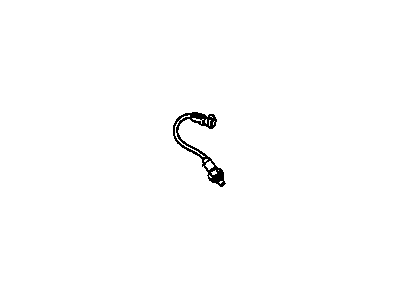
Pontiac Fiero Oxygen Sensor
The Oxygen Sensor in Pontiac Fiero vehicles is used in detecting the unburned oxygen levels in the exhausts and therefore assisting the engine control computer to adjust the air/fuel mixture in order to enhance performance and at the same time reducing the emissions. By producing voltage in proportion with oxygen concentration, the sensor allows the engine to work in the "closed loop" which improves the catalytic converter work. Possible oxygen sensors for Pontiac Fiero models encompass zirconium dioxide based oxygen sensors including both narrow-band and wide-band oxygen sensors. The first type of sensors are the narrow-band sensors that supply signals either rich or lean while the second type are the wide-band sensors that give a wider range of A/F ratio. These sensors accumulate contaminants over time and as results the exhaust emissions increase and the fuel consumption decreases. To ensure that vehicles specific to Pontiac Fiero perform optimally the Oxygen Sensor should be monitored and maintained frequently.
Each OEM Pontiac Fiero Oxygen Sensor we offer is competitively priced and comes with the assurance of the manufacturer's warranty for the part. Furthermore, we guarantee the speedy delivery of your orders right to your doorstep. Our hassle-free return policy is also in place for your peace of mind.
Pontiac Fiero Oxygen Sensor Parts Questions & Experts Answers
- Q:What role does the oxygen sensor play in monitoring exhaust gas, and what are the implications of its malfunction on Pontiac Fiero?A:Monitoring of the oxygen situation is performed with the oxygen sensor located in the exhaust manifold through the feedback to the ECM; the ions can vary an air/fuel mixture and instantly adjust the ratio for the maximum efficiency and minimal emission, with the optimum coefficient of 14.7 to 1. If the sensor is open, then it develops a Code 13, a low or high voltage issue causes the engine to run on open loop creating Codes 44 and 45. For the sensor to work correctly it must have good electrical connection; it must not be choked with excess air; it must come to operating temperature of about 600 °F (315°C) and should preferably use unleaded fuel. This requires a sharp focus during servicing not to damage the permanently attached pigtail and connector, do not let contaminants get near the electrical parts, do not use cleaning solvents, and ensuring that silicone boot is properly placed. In case of replacement, the sensor is fitted in a different location depending on the type of engine and must not be replaced if the engine is cold or below 120°F. The location of the silicone boot should be observed and the sensor pulled back very gently just to avoid stripping the threads. To facilitate easy unfastening at a later stage, some threads on the sensor require an anti-seize compound with the sensor subsequently tightened to the required torque and connected to the main engine wiring harness.