My Garage
My Account
Cart
Genuine Saturn LS CV Boot
Axle Boot- Select Vehicle by Model
- Select Vehicle by VIN
Select Vehicle by Model
orMake
Model
Year
Select Vehicle by VIN
For the most accurate results, select vehicle by your VIN (Vehicle Identification Number).
2 CV Boots found
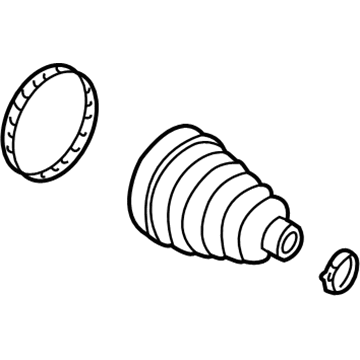
Saturn LS Boot Kit, Front Wheel Drive Shaft Tri, Pot Joint
Part Number: 22692049$6.75 MSRP: $46.51You Save: $39.76 (86%)Ships in 1-2 Business Days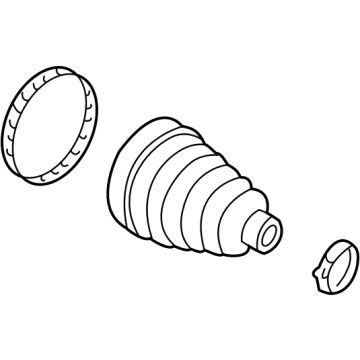
Saturn LS CV Boot
The CV Boot in Saturn LS vehicles plays an important role because the CV (constant velocity) joints that transfer power between the transaxle and wheels will be protected by this boot. This flexible rubber or plastic part holds the required lubricant and will not allow dust or any abrasive particle to intrude the joint to enhance the high performance. These vehicles employ various CV joints, Rzeppa, for the outer ends, and tripod or double offset for the inner ends. The outer joints get to more extreme angles while the inboard joints adjust for shaft length during suspension movement. Saturn LS owners should pay particular attention to the condition of the CV Boot, as any damages, including cracks or tears will lead to CV joint failure.
Each OEM Saturn LS CV Boot we offer is competitively priced and comes with the assurance of the manufacturer's warranty for the part. Furthermore, we guarantee the speedy delivery of your orders right to your doorstep. Our hassle-free return policy is also in place for your peace of mind.
Saturn LS CV Boot Parts Questions & Experts Answers
- Q:How to check CV Boot on Saturn LS?A:With the vehicle stopped and the front wheels pointed straight ahead, rock the steering wheel gently back and forth; excessive freeplay may indicate worn front wheel bearings, a steering shaft universal joint, or lower arm ball joints, or that the steering gear is out of adjustment or broken. Other symptoms, such as excessive body movement over rough roads, swaying around corners, and binding while turning the steering wheel, may suggest faulty steering or suspension components. Check the shock absorbers by pushing down and releasing the vehicle several times at each corner; if it does not return to a level position within one or two bounces, the shocks or struts are worn and need replacement. While bouncing the vehicle, listen for squeaks and noises from the suspension components. Inspect the struts and shock absorbers for fluid leakage, ensuring any noted fluid is from the struts or shocks and not another source; if leakage is found, replace them as a set. Ensure the struts and shocks are securely mounted and undamaged, checking the upper mounts for damage and wear, and replace them as a set if any issues are noted. Raise the vehicle with a floor jack and support it securely on jack stands, then check the tires for irregular wear patterns and proper inflation. Inspect the universal joint between the steering shaft and the steering gear housing for lubricant leakage, ensuring dust seals and boots are undamaged and boot clamps are secure. Examine the steering linkage for looseness or damage, checking tie-rod ends for excessive play, and look for loose bolts, broken or disconnected parts, and deteriorated rubber bushings on all suspension and steering components. While an assistant turns the steering wheel, check for free movement, chafing, and binding in the steering components. To check ball joints for wear, try to move each control arm up and down with a prybar; if there is play, replace the ball joint. Inspect ball joint boots for damage and leaking grease, replacing any damaged ball joints. At the rear of the vehicle, inspect the suspension arm bushings for deterioration. The CV boots are crucial for preventing dirt and foreign material from damaging the constant velocity joints; wash them with soap and water to prevent premature deterioration from oil and grease. Regularly inspect the outer CV boot for wear due to constant pivoting, checking for tears, cracks, and loose clamps; any evidence of cracks or leaking lubricant necessitates replacement.