
My Garage
My Account
Cart
Genuine 1990 Chevrolet Metro Piston
Engine Pistons- Select Vehicle by Model
- Select Vehicle by VIN
Select Vehicle by Model
orMake
Model
Year
Select Vehicle by VIN
For the most accurate results, select vehicle by your VIN (Vehicle Identification Number).
10 Pistons found
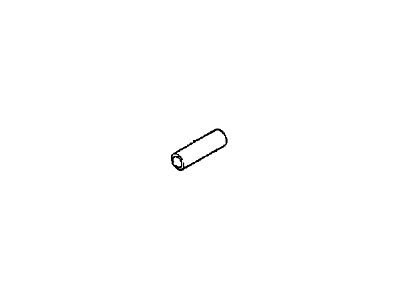 Product Specifications
- Other Name: PISTON, Engine Piston
- Condition: New
- Fitment Type: Direct Replacement
- Require Quantity: 3
- SKU: 96060043
- Warranty: This genuine part is guaranteed by GM's factory warranty.
- Product Specifications
- Other Name: PISTON, Engine Piston
- Replaces: 96062031
- Condition: New
- Fitment Type: Direct Replacement
- Require Quantity: 3
- SKU: 96067713
- Warranty: This genuine part is guaranteed by GM's factory warranty.
- Product Specifications
- Other Name: PISTON, Engine Piston
- Item Weight: 1.00 Pounds
- Item Dimensions: 3.7 x 3.3 x 3.2 inches
- Condition: New
- Fitment Type: Direct Replacement
- Require Quantity: 3
- SKU: 96067712
- Warranty: This genuine part is guaranteed by GM's factory warranty.
- Product Specifications
- Other Name: PISTON, Engine Piston
- Item Weight: 1.00 Pounds
- Item Dimensions: 3.9 x 3.2 x 3.4 inches
- Condition: New
- Fitment Type: Direct Replacement
- Require Quantity: 3
- SKU: 96060044
- Warranty: This genuine part is guaranteed by GM's factory warranty.
- Product Specifications
- Other Name: PISTON, Engine Piston
- Replaces: 96060045
- Item Weight: 1.00 Pounds
- Item Dimensions: 3.8 x 3.2 x 3.3 inches
- Condition: New
- Fitment Type: Direct Replacement
- Require Quantity: 3
- SKU: 96060046
- Warranty: This genuine part is guaranteed by GM's factory warranty.
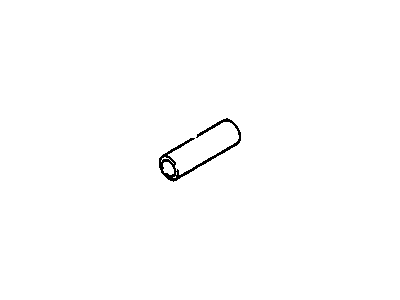 Product Specifications
- Other Name: PISTON, Engine Piston
- Replaces: 96062032, 96067714
- Item Weight: 1.00 Pounds
- Item Dimensions: 3.7 x 3.3 x 3.2 inches
- Condition: New
- Fitment Type: Direct Replacement
- Require Quantity: 3
- SKU: 96067715
- Warranty: This genuine part is guaranteed by GM's factory warranty.
- Product Specifications
- Other Name: PISTON, Engine Piston
- Replaces: 96060041
- Item Weight: 1.00 Pounds
- Item Dimensions: 4.1 x 3.3 x 3.2 inches
- Condition: New
- Fitment Type: Direct Replacement
- Require Quantity: 3
- SKU: 91174384
- Warranty: This genuine part is guaranteed by GM's factory warranty.
- Product Specifications
- Other Name: PISTON, Engine Piston
- Replaces: 91174385, 96060042
- Item Weight: 0.90 Pounds
- Item Dimensions: 3.8 x 3.3 x 3.3 inches
- Condition: New
- Fitment Type: Direct Replacement
- Require Quantity: 3
- SKU: 91177399
- Warranty: This genuine part is guaranteed by GM's factory warranty.
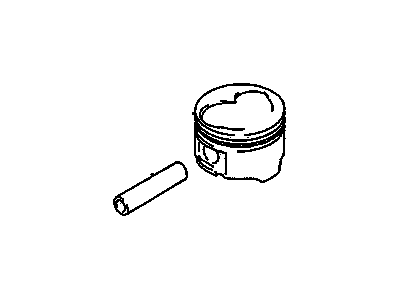 Product Specifications
- Other Name: PISTON, Engine; Piston
- Replaces: 91174383, 96060040
- Item Weight: 1.00 Pounds
- Item Dimensions: 4.2 x 3.6 x 3.3 inches
- Condition: New
- Fitment Type: Direct Replacement
- Require Quantity: 3
- SKU: 91177398
- Warranty: This genuine part is guaranteed by GM's factory warranty.
- Product Specifications
- Other Name: PISTON, Engine
- Replaces: 91174382, 96060039
- Item Weight: 1.00 Pounds
- Item Dimensions: 3.7 x 3.3 x 3.3 inches
- Condition: New
- Fitment Type: Direct Replacement
- Require Quantity: 3
- SKU: 91177397
- Warranty: This genuine part is guaranteed by GM's factory warranty.
1990 Chevrolet Metro Piston
We are your prime source for competitively priced and high-quality OEM 1990 Chevrolet Metro Piston. We provide you with parts that will allow you to save a lot of money without sacrificing quality. All our OEM parts are backed by the manufacturer's warranty and shipped out at a swift rate.
1990 Chevrolet Metro Piston Parts Questions & Experts Answers
- Q:What steps should be taken before carrying out the inspection process on piston/connecting rod assemblies on 1990 Chevrolet Metro?Posted by Garlin G.A:Before the piston/connecting rod assemblies can be inspected, they have to be washed, and the original piston rings have also to be taken off the pistons for insertion of new piston rings each time. Take out the rings from the pistons by the help of piston ring installation tool in such a manner that do not harm the segments of the rings. With a hand-held wire brush or fine emery cloth remove all the carbon from the top of the piston, never use electric drills on a piston, as this wears the soft material quickly. Using a piston ring groove cleaning tool or piece of worn piston ring can be used to clean the ring grooves making sure that the grooves are only cleaned with the carbon deposits and not damaged. For piston and rod, first remove the deposits and then wash with solvent and then follow by blowing compressed air in the oil return holes in the ring grooves. In the same development if the pistons and cylinder walls are in good conditions and the engine block has not been rebored, then new pistons may not be required though new piston ring should always be provided when rebuilding an engine. Look for cracks, scoring, scuffing, holes or burnt areas on each piston since all these may be suggestive of overheating or abnormal combustion, for which the cooling and lubrification system has to be checked thoroughly. They testify to coolant leakage, which has to be fixed to avoid the formation of more aggressive types of corrosion, such as pitting. Check piston ring side clearance with a feeler gauge at several places around each of the grooves with the correct ring positioned in the groove; excessive width may mean that the pistons will have to be replaced. Take the bore and piston diameter and compare it hoping that it is correct and measure the clearance; if the clearance is large, rebore the block and use new pistons and rings. Twist the piston and the rod and try to establish the piston-to-rod clearance; if there is play, the necessary adjustment is required, which probably will mean resizing and pinning at an automotive machine shop. If the pistons are to be removed from the connecting rods, send them to a machine shop for checking for bend and twist; it is better not to dismantle unless there is a need to put in new ones. Last but not least, examine the connecting rods for any sign of crack and damages, and the bearing surface should be free from nicks and scratch; old bearings should be replaced before proceeding with the reassembly.Answered by GM Parts Specialist Julian / Apr 30, 2023
Related 1990 Chevrolet Metro Parts
 1990 Chevrolet Metro Crankshaft Thrust Washer Set
 1990 Chevrolet Metro Crankshaft
 1990 Chevrolet Metro Crankshaft Gear
 1990 Chevrolet Metro Alternator Bracket
 1990 Chevrolet Metro Automatic Transmission Seal
 1990 Chevrolet Metro Brake Caliper Bolt
 1990 Chevrolet Metro Drain Plug