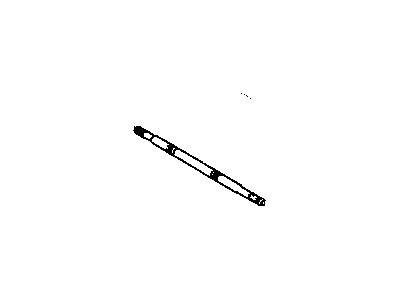
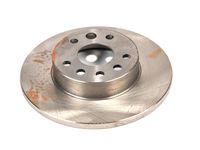
The power from the transaxle is taken to the rear wheels through drive axles which are splined solid axles provided with constant velocity (CV) joints at either end. The inner CV joint is a "tri-pot" design, and is completely flexible as it has an in-and-out movement; it is made up of a spider bearing assembly and has a tri-pot housing for angular movement. Ball bearings between an outer cage and an inner race constitute the outer joint; this is also flexible but it does not rotate or move in and out. In the rear driveaxle, and in all other cases except the LH side with automatic transaxle, a male spline is used, engaging with the splines on the transaxle gears through metal rings known as full-barrel snap-rings. The left in-board shaft attachment on the automatic transaxle employs a female spline that is located over a stub shaft from the transaxle. Further, the shaft end that connects with the knuckle and hub assembly is formed with a right hand helical spline to provide therefore, a press-type fit between the hub bearing on the one hand and the driveaxle assembly on the other hand so as to eliminate end float. It is therefore necessary to always check on the boots for signs of damage, leaking lubricant or cuts, the inside boots have breather holes, in case the joint is compressed on removal of the boots some lubricant might leak. It is required to replace the damaged CV joint boots as soon as possible to prevent the joint from getting damaged. Boot replacement requires the removal of the driveaxles; outer boots can be replaced with the driveaxles still engaged using an aftermarket boot kit with split boots. Signs that may suggest a problem with the condition of the CV joint are: leakage of lubricant, noise at the time of turning or-clicking sound while decelerating, thudding sound when accelerating from a coasting position, or any form of vibration when driving at high speeds on the highway.