
My Garage
My Account
Cart
Genuine 1986 Chevrolet El Camino Axle Shaft
Car Axle Shaft- Select Vehicle by Model
- Select Vehicle by VIN
Select Vehicle by Model
orMake
Model
Year
Select Vehicle by VIN
For the most accurate results, select vehicle by your VIN (Vehicle Identification Number).
1 Axle Shaft found
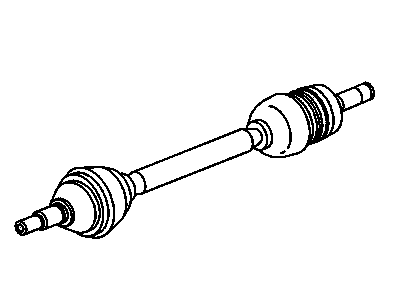 Product Specifications
- Other Name: Shaft,Rear Axle ; Shaft,R/Axl; Axle Shaft
- Position: Rear
- Item Weight: 14.70 Pounds
- Item Dimensions: 6.8 x 6.7 x 33.1 inches
- Condition: New
- Fitment Type: Direct Replacement
- Require Quantity: 2
- SKU: 22506477
- Warranty: This genuine part is guaranteed by GM's factory warranty.
1986 Chevrolet El Camino Axle Shaft
We are your prime source for competitively priced and high-quality OEM 1986 Chevrolet El Camino Axle Shaft. We provide you with parts that will allow you to save a lot of money without sacrificing quality. All our OEM parts are backed by the manufacturer's warranty and shipped out at a swift rate.
1986 Chevrolet El Camino Axle Shaft Parts Questions & Experts Answers
- Q:What are the features and identification details of the rear axle shaft on 1986 Chevrolet El Camino?Posted by Krystin H.A:The rear axle is of hypoid semi-floating type, with a casting differential carrier and a pressed steel cover. The axle tubes are made of steel construction. Due to the need for special gauges and equipment, as well as the unavailability of individual differential components, servicing and repair operations should be confined. An optional Positraction (limited slip) differential unit has been available since the earliest models, which includes clutch cones or plates and springs to slow down the rotation of the differential case when one wheel is on a firm surface and the other on a slippery one. The axle identification number, located on the front face of the right-hand axle tube, is important for certain operations such as the removal of the axleshafts. The axle code, which can be determined using the axle code and ratio chart, indicates the gear ratios installed in the axle assembly. The third letter of the code identifies the manufacturer of the axle, with slight variations in axle design between manufacturers. The numbers following the manufacturer's code indicate the day of the year the axle was built, with the letter D or N representing day or night shift. The last letter of the code identifies a locking axle (Positraction), with different code letters for different manufacturers. The axle code chart provides information on the gear ratio and year of each axle assembly, with later vehicles potentially having the axle ratio stamped on the housing.Answered by GM Parts Specialist Syed / May 20, 2024
Related 1986 Chevrolet El Camino Parts
 1986 Chevrolet El Camino Wheel Bearing
 1986 Chevrolet El Camino Torque Converter
 1986 Chevrolet El Camino Slip Yoke
 1986 Chevrolet El Camino Transmission Pan
 1986 Chevrolet El Camino Output Shaft Bearing
 1986 Chevrolet El Camino Input Shaft Bearing
 1986 Chevrolet El Camino Pinion Washer
 1986 Chevrolet El Camino Transmission Gasket