
My Garage
My Account
Cart
Genuine 1987 Chevrolet El Camino Axle Shaft
Car Axle Shaft- Select Vehicle by Model
- Select Vehicle by VIN
Select Vehicle by Model
orMake
Model
Year
Select Vehicle by VIN
For the most accurate results, select vehicle by your VIN (Vehicle Identification Number).
1 Axle Shaft found
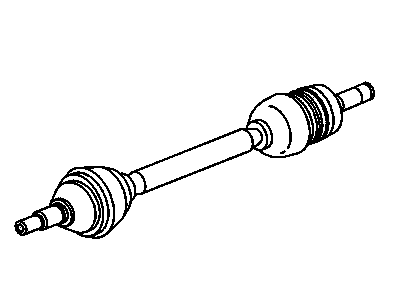 Product Specifications
- Other Name: Shaft,Rear Axle ; Shaft,R/Axl; Axle Shaft
- Position: Rear
- Item Weight: 14.70 Pounds
- Item Dimensions: 6.8 x 6.7 x 33.1 inches
- Condition: New
- Fitment Type: Direct Replacement
- Require Quantity: 2
- SKU: 22506477
- Warranty: This genuine part is guaranteed by GM's factory warranty.
1987 Chevrolet El Camino Axle Shaft
We are your prime source for competitively priced and high-quality OEM 1987 Chevrolet El Camino Axle Shaft. We provide you with parts that will allow you to save a lot of money without sacrificing quality. All our OEM parts are backed by the manufacturer's warranty and shipped out at a swift rate.
1987 Chevrolet El Camino Axle Shaft Parts Questions & Experts Answers
- Q:What is the usual reason for axle shaft removal on this type of axle on 1987 Chevrolet El Camino?Posted by Rizwan K.A:The usual reason for axleshaft removal on this type of axle is excessive shaft end play. To check this, remove the road wheel and brake drum and attach a dial gauge to the axleshaft end flange. If the shaft can be moved in and out by hand, the end play should not exceed 0.022 inches. If it does, the shaft bearing is likely worn and the following operations should be carried out. First, unscrew and remove the bolts attaching the axleshaft retainer plate to the brake backing plate. Then, attach a slide hammer to the road wheel mounting studs and withdraw the axleshaft, avoiding pulling it by hand from the housing. As the axleshaft is removed, the bearing may separate into three parts, but this does not mean it is unserviceable. If this happens, remove the two sections left behind from the axle tube. With the axleshaft removed, hold it in a vise so that the bearing retainer ring rests on the jaws' edges. Use a hammer and sharp chisel to nick the retainer in two places, spreading it to slide off the shaft without damaging it. Do not attempt to cut the retainer with a torch as it will ruin the shaft's temper. Use a press or extractor to withdraw the bearing from the axleshaft and remove and discard the oil seal. When installing the new bearing, ensure the retainer plate and seal are installed to the shaft first, pressing the bearing and retaining ring tightly against it. Before installing the axleshaft assembly, apply wheel bearing grease to the bearing end and races in the axle housing tube, and rear axle oil to the axleshaft splines. Hold the axleshaft horizontally and insert it into the axle housing, feeling when the shaft splines engage with those in the differential side gears, and then push the shaft fully into position using a soft-faced hammer on the end flange if necessary. Finally, bolt the retainer plate to the brake backplate, install the brake drum and wheel, and lower the vehicle to the ground.Answered by GM Parts Specialist Jose / Feb 24, 2024
Related 1987 Chevrolet El Camino Parts
 1987 Chevrolet El Camino Wheel Bearing
 1987 Chevrolet El Camino Torque Converter
 1987 Chevrolet El Camino Slip Yoke
 1987 Chevrolet El Camino Transmission Pan
 1987 Chevrolet El Camino Output Shaft Bearing
 1987 Chevrolet El Camino Input Shaft Bearing
 1987 Chevrolet El Camino Pinion Washer
 1987 Chevrolet El Camino Transmission Gasket