
My Garage
My Account
Cart
Genuine 1985 Pontiac Fiero Brake Calipers
Caliper- Select Vehicle by Model
- Select Vehicle by VIN
Select Vehicle by Model
orMake
Model
Year
Select Vehicle by VIN
For the most accurate results, select vehicle by your VIN (Vehicle Identification Number).
2 Brake Calipers found
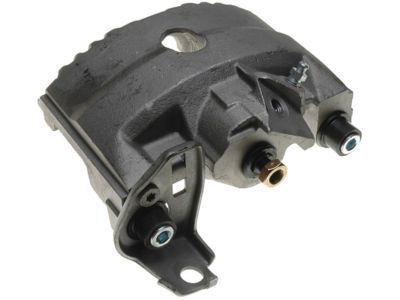
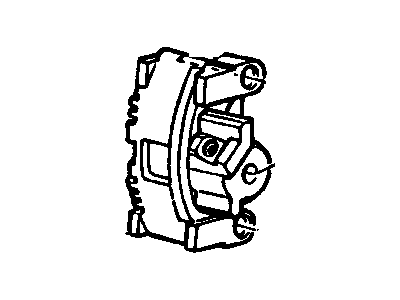 Product Specifications
- Other Name: CALIPER, Wheel Brake Cylinder/Caliper; Caliper
- Position: Rear
- Replaces: 18036720, 18019030
- Item Weight: 6.10 Pounds
- Item Dimensions: 14.4 x 13.7 x 10.6 inches
- Condition: Remanufactured
- Fitment Type: Direct Replacement
- SKU: 19140959
- Warranty: This genuine part is guaranteed by GM's factory warranty.
- Product Specifications
- Other Name: CALIPER, Wheel Brake Cylinder/Caliper; Caliper
- Position: Rear
- Replaces: 18019029, 18036721
- Item Weight: 6.00 Pounds
- Item Dimensions: 10.0 x 7.0 x 7.0 inches
- Condition: Remanufactured
- Fitment Type: Direct Replacement
- SKU: 19140958
- Warranty: This genuine part is guaranteed by GM's factory warranty.
1985 Pontiac Fiero Brake Calipers
We are your prime source for competitively priced and high-quality OEM 1985 Pontiac Fiero Brake Calipers. We provide you with parts that will allow you to save a lot of money without sacrificing quality. All our OEM parts are backed by the manufacturer's warranty and shipped out at a swift rate.
1985 Pontiac Fiero Brake Calipers Parts Questions & Experts Answers
- Q:How to overhaul the Brake Calipers and brake pads on 1985 Pontiac Fiero?Posted by Celestine H.A:Take out the caliper and then, take the pads from the caliper and thereafter take off the anti-rusting preventive shield. Put a block of wood to the side of the piston and arrange for someone else to pump the brake pedal until the piston is close to sticking out of its bore; this makes removing the piston easier. Pull off the inlet hose fitting from the caliper and expel the caliper piston with compressed air through the inlet hole of the caliper and ensure the caliper is taken off the vehicle and placed on a bench and use an air nozzle to push the piston back and force it out from the bore using rags to minimise harm to the component. Before installing the piston, be sure to check if the piston is either scored or nicked, corroded, or the chrome plating is worn out, and if so, replace the piston. Using a screwdriver pry the boot out of the caliper with care to avoid the piston bore to be scratched, withdrawing the piston seal from the groove located at the interior part of the caliper bore should be done gently using a wooden or plastic implement. Inspection of the caliper bore should reveal no scoring, nicks, corrosion, or wear; if there is light corrosion, they should be removed using crocus cloth and if this is not possible, then the caliper housing should be replaced. Bleeder valve must be removed and checked for corrosion and if that is the case should be replaced, same applies to the mounting bolts if they exhibit any signs of corrosion. Four of the rubber bushings must be taken out of the caliper mounting bolt holes carefully so that the inner walls are not scratched. All brake parts should be washed in clean, denatured alcohol and after that, they should be dusted using compressed air with the aim of making sure that all the passages in the caliper housing including the bleeder valve are free. Secure the bleeder valve on the caliper housing, in the appropriate position in accordance with the recommendations as to the torque setting. Using clean brake fluid make sure that the new seal and the bore of the caliper housing is well lubricated and then insert the new sealing moving it around the bore but should not twist. Place the boot at the end of the piston recommended and push the piston into the bore until it is depressed at the bottom; try to apply force with a couple of screwdrivers carefully. Place the boot directly into the counter bore in the caliper housing and with a screwdriver drive it in without pressing the new boot anywhere except the outer hard edge. Last but not least, you should then put in the brake pads as well as also putting back the caliper.Answered by GM Parts Specialist Bob / May 14, 2025
Related 1985 Pontiac Fiero Parts
 1985 Pontiac Fiero Brake Pad
 1985 Pontiac Fiero Brake Disc
 1985 Pontiac Fiero Brake Bleeder Screw
 1985 Pontiac Fiero Brake Caliper Repair Kit